Wednesday, 26 April 2017

Three Days in North Norfolk - 1


At Morston Quay, with Blakeney Point out to the left

We returned from North Norfolk a couple of days ago after a glorious time around the coast. There is so much wildlife in the area: we counted 45+ species of bird and had several encounters with animals. It was good to see a few insects emerging. I took (too) many photos so will save some for the next post. As you can see, the weather was bright at times, though often chilly. The National Trust photo here gives a good impression of the landscape.

The path to Arnold's Marsh, NWT Cley

The Norfolk Wildlife Trust centre at Cley is always a favourite destination. The sea is just beyond the ridge.

Morston Quay, looking back to Blakeney
The North Norfolk skyline is peppered with towers, spires and masts.


The light may be intoxicating at times but the soundscape is compelling, too. We enjoyed the heady mix of Skylark song, Oystercatcher calls and the occasional Curlew.


...
Morston Quay

There were plenty of waders in the mudflats, including Redshank. 


The view from Morston Quay

The blue building in the distance is the Blakeney Point Visitor Centre...

A bit of camera-shake, but it gives a good impression
... It was built in 1898 and was originally a lifeboat station. 

Blakeney Point

Once again, a good zoom was needed; but my record shot shows the Watch House, which had previous lives as a Customs and Excise lookout (yes, there was smuggling activity along this coast) and later as an official coastguard station.


Back in Cley, just along the coast, there were good numbers of Little Egrets. I recall seeing these birds for the first time some 26 years ago when we first arrived in Swansea. I believe (if my memory serves me correctly) that they were all or mostly migrant visitors at that stage. These days many of them breed in the UK and live here all year round.


It is always hard to drag oneself away from the Cley area, but we had other sites on our agenda, including a first visit to the Norfolk Wildlife Trust site of Holme Dunes, along the coast in a westerly direction. This beautiful coastline hugs the Wash, and is wild, windswept and a very fragile environment.

Holme

You can see the attempts to slow down the effects of coastal erosion...


... and although this could hardly be a more different setting, I was reminded of that evocative line by Keats in Ozymandias

'the lone and level sands stretch far away...'


We saw a few Ringed Plovers on the beach, and plenty of evidence of bird life in the empty shells that were scattered along the tideline.

NWT Holm Dunes, Norfolk
The photo above fails to do justice to a remarkable boardwalk, but you can just make out the ridge on which it stands. David is looking east towards Burnham Overy and Brancaster (with its Saxon Shore fort remains). The Wash is away to his left.


To our surprise and delight, we found a reserve within a reserve, and we enjoyed visiting the NOA hides and looking at the ringing nets. There were charms of Goldfinches in the trees, and quite a few Linnets, too. There were Pink-footed Geese nestling in the grassy areas - and a few Lapwing doing their aerial acrobatics.

Insect (thanks to iSpot, probably a St Mark's Fly, St Mark's Day being 25 April)
in spider's web attached to a bird hide, NOA Observatory reserve at Holme

I mentioned insects, and there were plenty of these strange black ones in the air. It must have been their time for hatching out. I will try and get an identification. We saw them at Cley and Holme.


As we left the nature reserves at Holme we noticed a number of caterpillar tents. They are aleways interesting to see.


We encountered this unusual pair of Mallards at the approach to the beach in Snettisham, another excellent birding spot on The Wash. Mallards, of course, are renowned for their hybridising partnerships (and are sometimes known as 'manky Mallards'), so perhaps these ducks were not so unusual after all.


 We knew that Snettisham was a good place for waders, 
 and as you can see, we were not disappointed.


There were also a few Shelduck and Oystercatchers around.


You can see the vast mudflats around this part of The Wash. From Holme we thought we caught a glimpse of the famous 'Boston Stump' across the vast expanse of water.


Folk at the RSPB Wildlife Fair in Norfolk last year had recommended the Hawk and Owl Trust reserve at Sculthorpe Moor, so we felt it was time to pay it a visit. The boardwalks were long and well maintained.

Sculthorpe Moor, near Fakenham


There were signs of spring everywhere, including out on the water. This was one of a clutch of nine Mallard ducklings.


More insects - above and below - and both species in need of identification. I will add in the names if the kind people on iSpot are able to help.

It was good to see tadpoles...


I am more familiar with ladybirds, and it was good to see our first 2017 Kidney-spot ladybird on the trunk of a tree.


David produced his measuring card, and I will log the ladybird's details on the UK Ladybird Survey site.


We did not see any moles, but there were some new mole heaps about. We also noticed a huge mole fortress, something quite new to me.

This little chap (too small for a rat) was scampering below a bird feeder...

The creature was incredibly nimble and I kept missing a good (photo) shot.

Missed again - just a couple of golden-brown ears!


This was an impressive hide!


Our sightings at Sculthorpe Moor included Reed Bunting (above), Bullfinch and Nuthatch.


More woolly than wild, but we enjoyed watching these Suffolk (or Suffolk-cross) sheep.


More tadpoles!


We had good sightings of Sedge Warbler at Cley and Sculthorpe...


There were a few pairs of Teal at Cley: I love that iridescent splash of emerald on the female!

Wells - for waterfront fish and chips!
A seal of sorts... (unfortunately the seal boats were not accessible)

Part 2 to follow... but for an account of the birding scene in this area
by someone who knows his species far better than we do,
why not click here to visit Adam Tilt's blog
and share his North Norfolk adventures. 

Monday, 10 April 2017

A Trough for Wildflowers ~ Responding to a BBC Springwatch SOS


Those of you who read my previous post will know that we visited NT Ickworth some days ago to see the wonderful lambs. The photo above shows the striking rotunda, and if you click the next link, you will see a photo of another rotunda, this time on Belle Isle in the Lake District, which is associated with Fletcher Christian of Mutiny on the Bounty fame (or infamy). But I digress. 


This post is neither about lambs nor acts of derring-do on the high seas. The photo above shows the walled garden at Ickworth last August, when the wildflowers were abundant. Now you may feel that to grow wildflowers from packaged seed is a bit of a contradiction in terms; but, quite apart from the riot of colour, just think of all the pollen that will be attracting our insects. And we do have a nettle patch at home as well.

[UPDATE on 11 April 2017: at this point it seems a good idea to insert the helpful comment from fellow poet and blogger, Mavis Gulliver, as some of us may wish to follow her advice...  Mavis writes... 'We've been gardening for wild flowers on Islay for 21 years but rather than introduce non-native species and importing seed from the continent we gather local seed and have progressed from 1.2 acres of bracken,rocks and heather clumps to 204 species. Of course some have come of their own accord once our mowing regime encouraged them. Soon we will be leaving for a new challenge where I plan to follow the same principles. Gardening in this way doesn't produce such a colourful show as the packs of wild seed but we are helping to maintain the local flora.' Thank you, Mavis, so much for this important tip.]


I posted the tulip photo below in my previous post, but I am posting it again because it is current, and helps to show the extent of the area covered by poppies, cornflowers and all the other beauties in the photo above. 


The August 2016 photo below, shows blues, yellows, reds, whites and greens of this garden: what a spread for our pollen-gatherers...


... like this one...


Inspired not only by the riot of colour at Ickworth but also by the BBC Springwatch SOS exhortation to have a small wildflower planter within the garden, we bought ourselves a green trough and have planted three packets (quite large ones) of mixed wildflower seed. I have moved the primroses to another place now, and have filled the trough with soil pretty much up to the top. Small green shoots, reminding me of the first flush of mustard and cress from the days when we planted small seeds on blotting paper and squares of flannel, have already started to appear.


Needless to say, I can hardly wait for the first bud to open, and, if all goes according to plan, for the insects to come flying in.

The blackboard below was at Ickworth last summer, and while our own wildflower trough will be minuscule in comparison with the Ickworth garden, it should help to encourage wildlife into our homepatch.


Do drop a comment if you plan to plant a wildflower 'garden', too...
I plan to give intermittent updates on our green trough.

Friday, 7 April 2017

More woolly than wild?

We had a wonderful time at NT Ickworth with the lambs last weekend...


These tulips in the walled garden mark out the extent of last year's wildflower 'patch'...

... I love tulips, but I also love all the insects that wildflowers attract.

What it is to be cool...

...or cute.


... Oh, and we also saw a stoat, but sadly it was too fast for my camera. A wonderful sighting all the same.

Thursday, 30 March 2017

Seasonal First - Comma


I love this season of 'firsts'. A Comma landed in the garden today in the spring sunshine. May there be many more!

The larvae of this species feed off nettles in areas where hops are not plentiful. Our own wild nettle patch is growing fast and I have been surprised by the number of toadstools it seems to attract!

Wednesday, 29 March 2017

Garden 'First' - Brimstone Butterfly

Female

I made my first recording to date of a Brimstone (male) in our garden yesterday. I wondered if I had glimpsed one the day before, but yesterday's was a definite sighting. It perched on our gold Euonymus bush for a couple of seconds, sadly not long enough for me to get my camera into focus, before flying off. But it was there.

The photos above an below were taken on previous occasions and in different places, but they show the difference in colour between the female and the male.

I shall soon be posting an updated garden list of the species I have observed...

Male


Monday, 27 March 2017

Seasonal First: Frogspawn in Sudbury


I have been keeping a sharp eye out for my first frogspawn of 2017, and was finally rewarded yesterday afternoon on the meadows bordering the River Stour in Sudbury. The clump had gathered a fair amount of plant material, but despite the bits of weed and reed, the embryo tadpoles were clearly visible. 

I have logged the sighting here (#SpawnSurvey). 


This part of the town was looking particularly lovely with Mallards in the water, a Willow coming into leaf and plenty of Daffodils on the bank.

  • I had a hunch I was a bit late this year. This link will take you to spawn I saw in Felixstowe in 2014, much earlier in March...

Friday, 24 March 2017

More insects... and the first daisies


These photos are a bit of a mixed bag, taken in our garden in bursts of sunshine. The wind has been a chilly one, but in sheltered spots, there have been signs of insect life. 


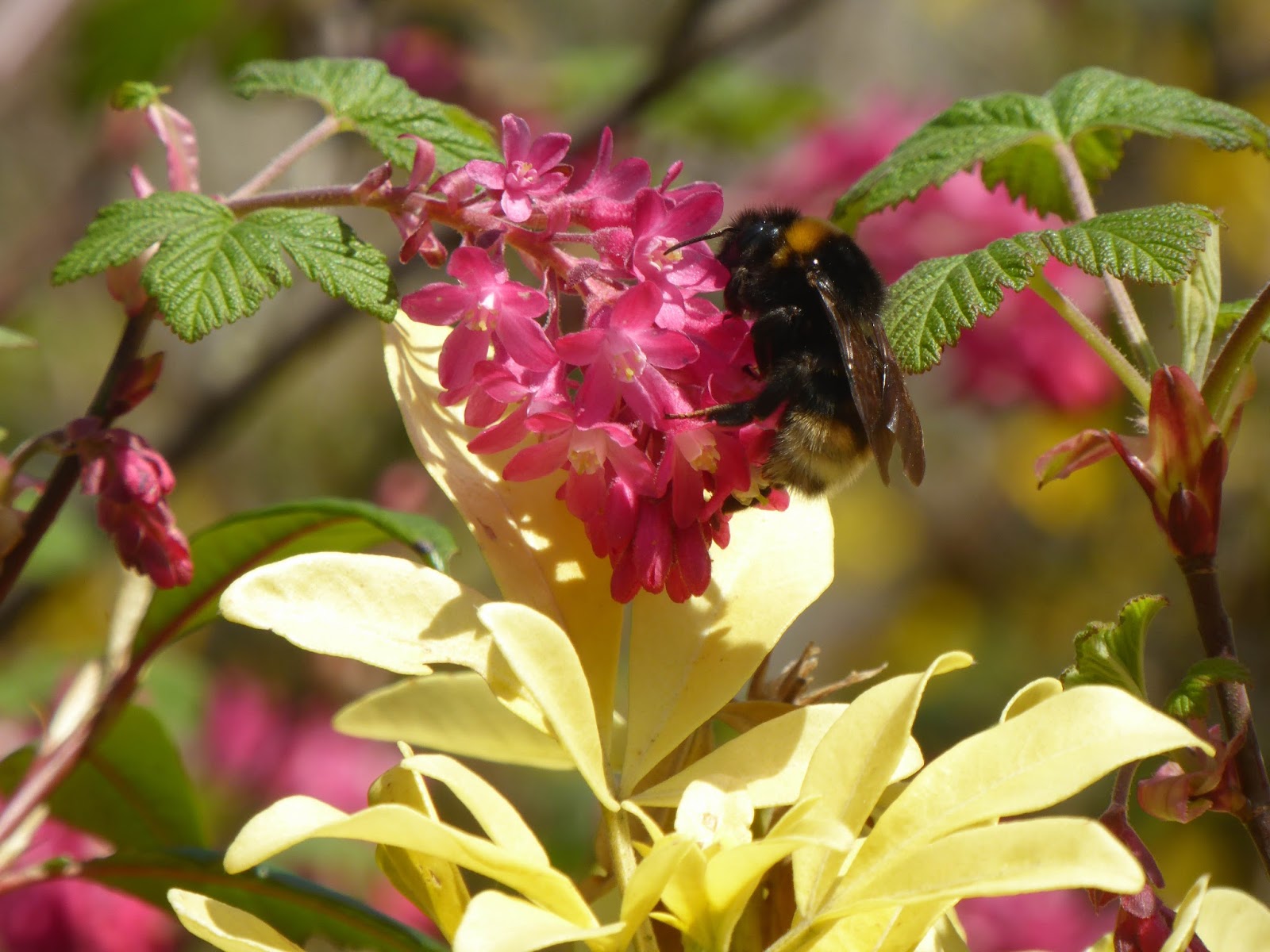
The flowering currant is always a favourite with bees.


The most colourful corner - Flowering Currant and Forsythia


I was delighted to find this little clump of Daisies. May there be many more as the days grow longer. N.B. For those of us in the UK, the clocks change this weekend. 


And a first Dandelion in the garden, emerging round a paving slab.

Friday, 17 March 2017

Insects at last!


I love the spring flowers in their own right... 


... but I also love the fact that their pollen attracts insects. 


I have seen a good number of Bumbles this spring, but that may be partly linked to the fact that we took a walk around a favourite churchyard that was carpeted (wall-to-wall) in pale purple crocus last weekend. There were a few primroses, too. The complementary shades of yellow and purple always look good together. I wondered if the bee had a tick on its face, or possibly a lump of pollen, but having done a little reading, I think it may be a mite.

Having enjoyed a walk around NT Ickworth's huge wildflower meadow in the walled garden last summer, I am hoping to respond to one of the BBC Springwatch S.O.S. projects by making my own mini-meadow for wildflowers in a large garden tub. I may also scatter some seeds in our nettle patch to increase the range of wildlife that I hope it will attract. Watch this space!


This little ladybird was strolling about in a shady corner of our door frame. I had to climb in a bush to take the picture - my excuse for the poor quality... I think it may be a Pine Ladybird (can you make out a rim around the outer edge of the elytra?). It was pretty small.

Have a good weekend! 

Tuesday, 14 March 2017

Brimstone Butterfly


We saw our first female Brimstone of 2017 last Sunday flitting around the hedge in our church car park. Sadly I did not have my camera with me, so this is a photo from last summer (you can tell the season by the orange Crocosmia, which is not yet in flower!).

Male Brimstones are a distinctive lemon colour and females have a touch of cream about them. I had never made the connection between the word 'butterfly' and the (butter) colour of the Brimstone before.

After a slow start, there are suddenly numerous signs of spring, and I wonder which species of (early) butterfly will cross my path next...