Thursday, 2 May 2013

Beautiful Birds: Puffins at RSPB Bempton Cliffs


Those who are familiar with my blog will know how much I like Puffins!

I have been concerned by recent media stories (and here) of declining numbers and of dead and emaciated birds being washed up on our beaches.

We arrived at Bempton Cliffs on 20 April 2013, wondering whether any Puffins would have returned to their nesting sites. It was a cold afternoon, with blue sky and a blustery breeze. I had a job to angle my monopod and to keep the camera still. However, we had only been there a very short time when we saw our first Puffin of the season.


You can see the bird here, eyeing up its burrow on the cliff edge. 


The bird flapped about a bit, but seemed tired.


It was soon time ...


... for a rest.


A few minutes later the bird stood up and surveyed the scene ...
... when lo and behold, there one Puffin ...


... became two.

 It was soon time for a further siesta ...
 ... while the sea raged below the cliff.
An inquisitive Razorbill inspected his new neighbours ...


... deciding that they needed an even closer once over
There was a sudden kerfuffle ...


... and two Puffins became three.


I don't know what had happened to the third Puffin's mate ...


... but the pair of birds carried on without much regard for the one on its own. 


I wished I could have been just a bit closer to watch the pair as each partner demonstrated affection for the other.


'Affection' sounds a very anthropomorphic term ...


... and I only use it because I cannot think of a better one. Suggestions on a postcard, please!


I think you can see from this photo how one partner was much larger than the other.


Puffins don't make a lot of noise on the cliff, so I was interested to see this bird opening its bill.


Siesta over, it was soon time ...


for a bit of nest-building. Puffins lay a single egg. You can read about the breeding season here.  
During the time we were out on the cliff, we saw three Puffins (the ones in the photos above) to our left, and this single Puffin (spot the orange feet) in among the Guillemots on our right.

RSPB Bempton Cliffs is a wonderful resource, and the main Puffin viewing areas are pretty accessible. I would love to visit the site once the Pufflings have hatched later in the season.

Wednesday, 1 May 2013

Beautiful Birds: The Common Crane


We have just returned from a few days away on the east coast of England. I will post about Puffins soon, but I thought these Common Cranes deserved an initial mention since it was my first sighting of these birds in the wild.

We knew that the Cranes were about, but we really were not at all sure that they would put in an appearance. However, we had not been sitting quietly for very long when we heard a very distinctive sound. It was unmistakeable, and you can listen to a short (if somewhat muted) recording on the RSPB site here. We find Homer in the Iliad comparing the sonorous call to the noise made by advancing armies. We read that ...

"the Trojans advanced as a flight of wild fowl or cranes that scream overhead when rain and winter drive them over the flowing waters of Ocean."

We watched the birds in a mesmerised state, not sure whether to use the camera or binoculars.


It was fascinating to see the coordination between the wings and the feet. With the help of binoculars, we could just about make out the red patch above the eye.


The Common Crane is very large: in flight it reminded me of a Flamingo. The Crane was once a regular part of the East Anglian landscape, but ceased to breed here way back in about 1600. Place names like Cranfield and Cranmere reflect the presence of these birds in former days.


During our time away, we visited the extensive secondhand bookshop at Blickling Hall, where I bought a copy of Nature in Norfolk: a Heritage in Trust (Jarrold), a symposium volume published in 1976 to mark the 50th anniversary of the Norfolk Naturalists Trust. Eric Fowler's introduction includes a quotation by the seventeenth century diarist, John Evelyn, mentioning cranes' eggs from 'that country (especially the promontory of Norfolk.' Scientific knowledge was increasing rapidly, but concepts of 'conservation' were still two hundred years away.


You can read more about Cranes in the UK here at the Great Crane Project, supported by WWT, RSPB and Pensthorpe Conservation Trust. The Norfolk Wildlife Trust supports the Common Crane along with many other species in its patch. We joined the Trust while we were away, and greatly enjoyed the NWT reserves at Cley, Ranworth and Hickling. 


So why was I keen to see the Common Crane in the wild? Well, it is always exciting to see a new bird, to tick off a 'lifer', but Cranes came to my attention thanks to the wonderful blogging work of Vickie Henderson in the USA. You can see some of Vickie's Sandhill Crane photos here. Samples of her artwork of the rare Whooping Crane can be seen and purchased here.

Oh, and ... if you go down on the marsh today, look out for a big surprise!

Tuesday, 16 April 2013

Seasonal Splash: Minsmere, with dabbling ducks!


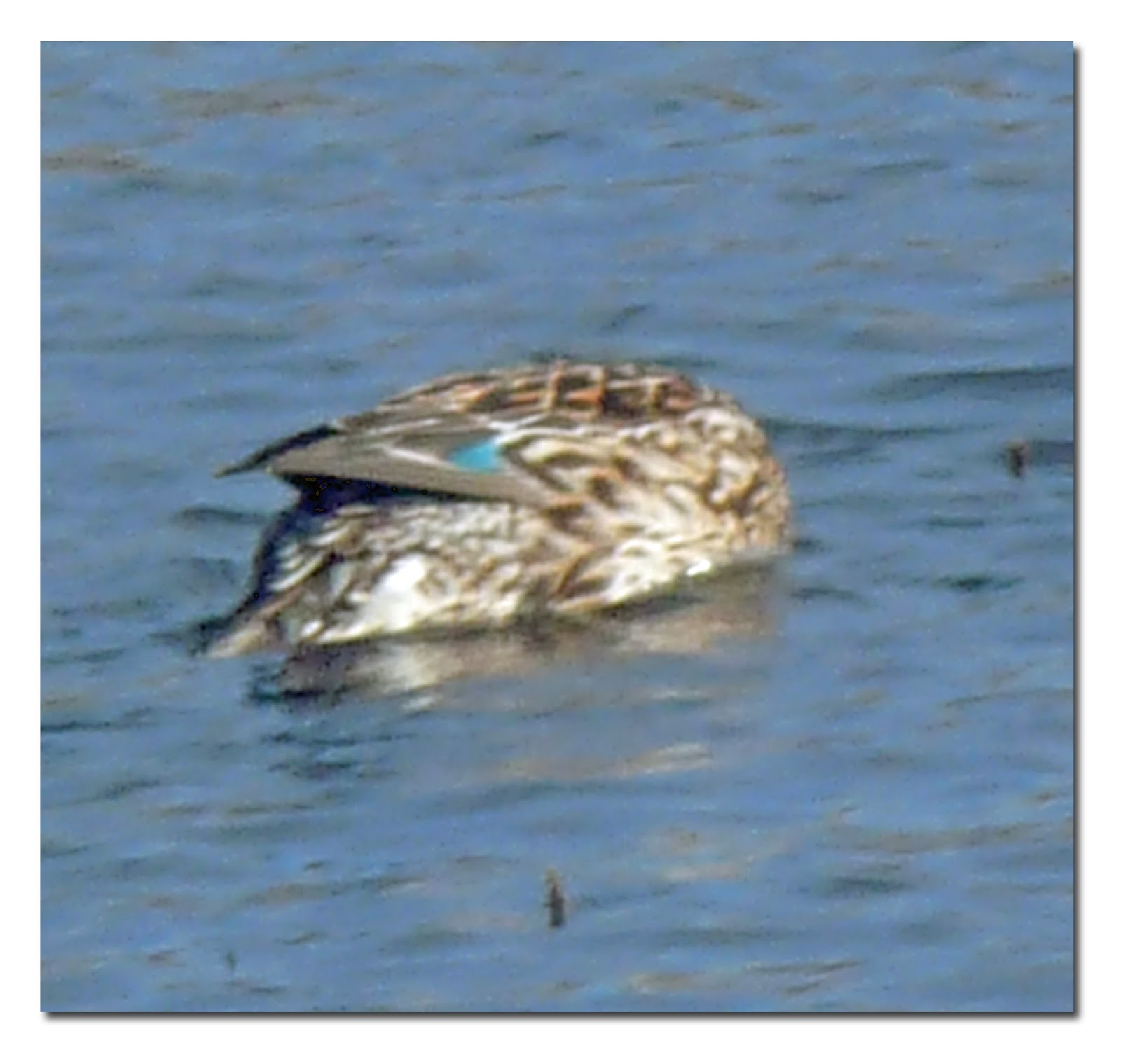
We had some fine spring sunshine at the weekend. The male Teal in the photo above was almost doing a handstand, as it dabbled! I guess the blue (rather than green) on the head was due to a combination of the glass in the hide and the iridescent fall of light. Teal are on our Amber conservation list.


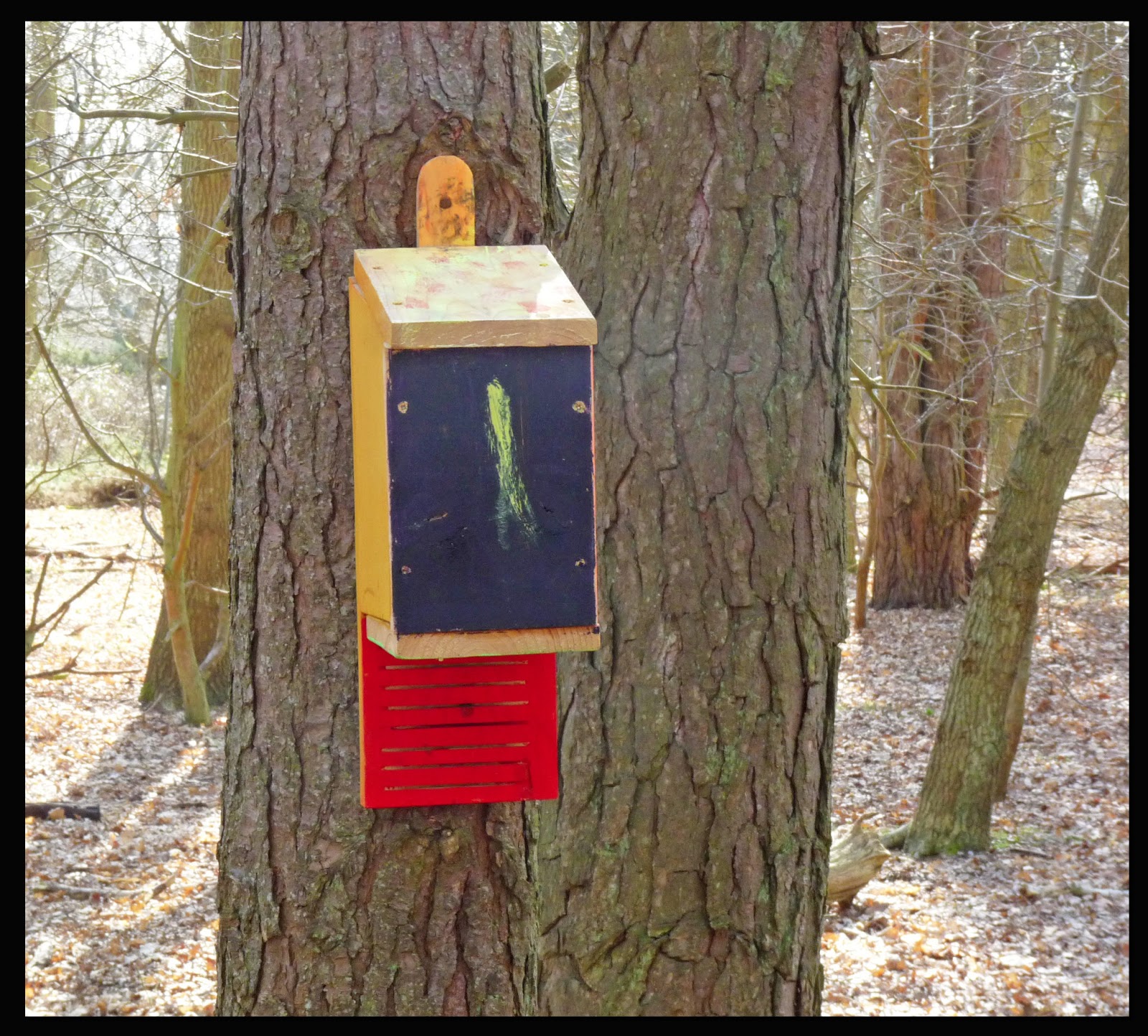
I mentioned recently that the nesting boxes were looking colourful at Minsmere. Here are a few more des res for birds and bats.

What a plump Greenfinch! His bright flash of yellow-green caught our eye as he flew off before I could take a better photo.

We watched a number of Lapwing at some distance from the North Hide. Again, their iridescent plumage sparkled in the sunlight.

The rabbits are usually very docile, and this one above was no exception. You can see the new Stinging Nettle shoots sprouting up - like the weeds in our garden!


This is a close-up of one of the bat boxes. Unlike the bird boxes, these ones do not have a circular hole in the front.


There were plenty of ducks about on the mere. This is a male Garganey. It is somewhat larger than a Teal, and easily identified by its head stripe.


I always feel it is such a shame that the dome of Sizewell Power Station dominates the landscape of the reserve.

Here is the Garganey again.


The tint of turquoise caught my eye!


This large Mallard was making the most of the Spring sunshine.

I think this is a Chiffchaff or a Willow Warbler, though I always find these birds very hard to identify with accuracy! Please let me know what you think ...
And finally ... back at home a new take on 'coconut cake'! This piece of coconut, emdedded with seeds and mealworms, fell to the ground after some wild trapeze antics from the local Great tits, Blue tits, Long-tailed tits and Robins. Look at the bill marks!

You can read about local migrant 'arrivals' here ... and the Minsmere Bitterns here

Thursday, 11 April 2013

Beautiful Birds: Goldcrest at Minsmere


I had never had a definite sighting of a Goldcrest before our move to Suffolk, so it was a thrill to watch two of these fine birds last Saturday at Minsmere. They are very small and skittish, and hard to catch on camera! They love to be in among the twigs; and while Saturday was a beautiful day, the sun brought its accompanying shadows, which added an extra level of difficulty to our photography challenge!


You can just about make out the distinguishing gold crest in the photo above. Apparently the Goldcrest is the smallest European bird.

© David Gill, used with permission!

This photo (above) was taken by David: can you spot the bird?


This is an enlargement of it.


It was lovely to see the pussy-willow buds developing apace ...

... and we thought these coloured nestboxes were really fun, though the only nestbox we saw that seemed to be attracting a bird was a plain brown one. A Blue tit was hovering about and perching on it. 


This lovely Wren was hopping about in the undergrowth. This must be one of the smallest European birds, too!

Several Marsh Harriers were hunting over this bit of marshland.

What a change to have blue skies!


We came home 'via' Southwold, where we ate our chips, watching the starling roost, with its amazing murmuration of corporate flying formations. It was a dazzling performance, set off against a fabulous sunset. Perhaps Spring is here at last. You can watch a similar spectacle here on this video about starlings returning to Israel. And if you would like to read about this murmuration and roost phenomenon, I highly recommend Crow Country by Mark Cocker.