Showing posts with label Robin. Show all posts

Saturday, 25 January 2025

2025 RSPB Big Garden Birdwatch


Like many of you, I took part in the RSPB Big Garden Birdwatch 2025 today. I had hoped for higher numbers, and indeed I saw other birds about, such as a Great tit, but not during the hour in question. 
 
I wonder which birds you saw ...


Here are some of the garden visitors who showed up during my hour ...


Blackbird

Robin

Blue tit

House sparrow

Sunday, 2 June 2024

Caught On Our Trailcam


We think this is a Song Thrush. rather than a Mistle Thrush: do you agree?

Robin taking off?

A hungry hedgehog

Hedgehog and snail

Hedgehog and snail (2)

Saturday, 22 April 2023

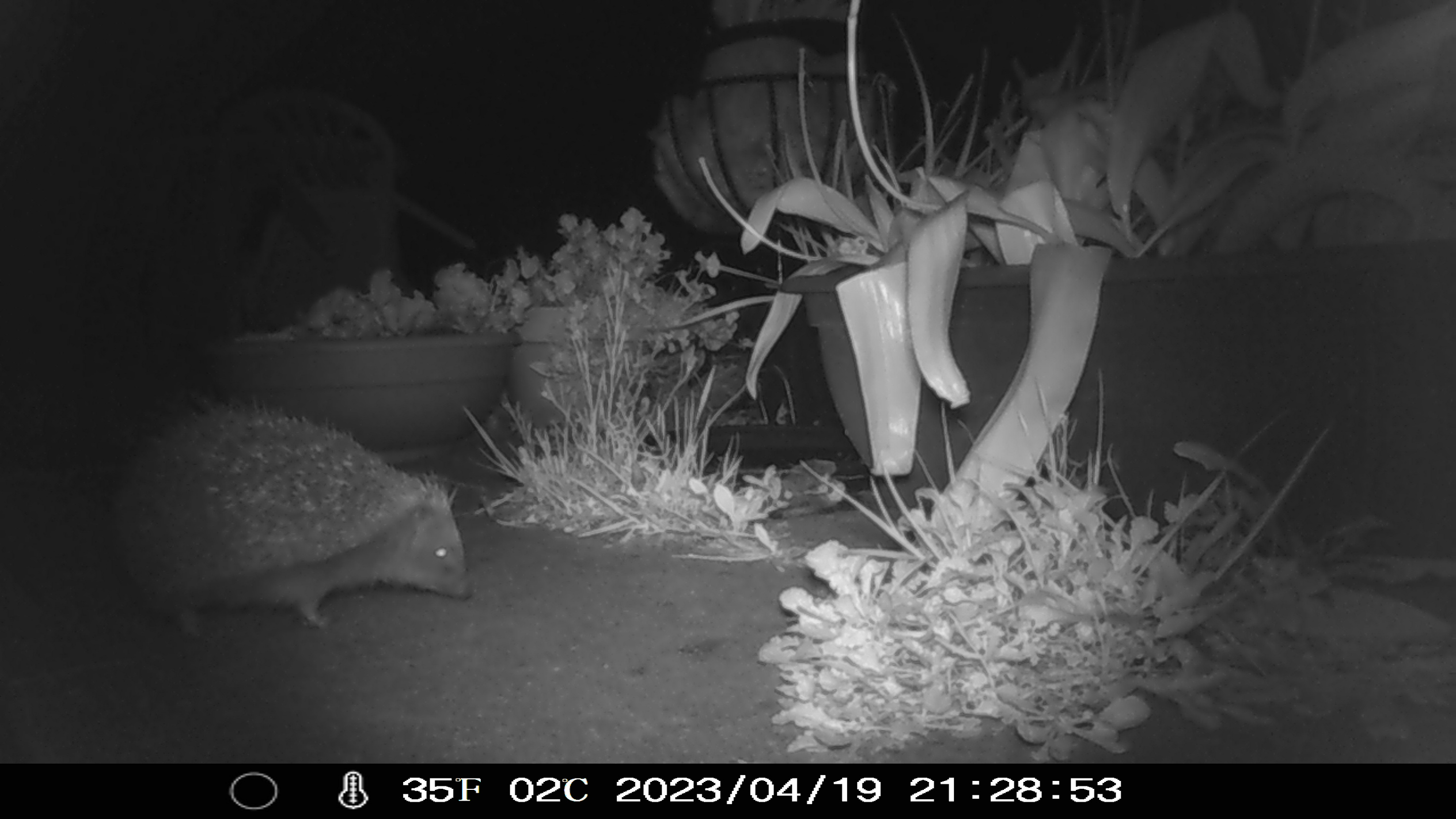
Caught on Camera: Mainly the Hedgehog


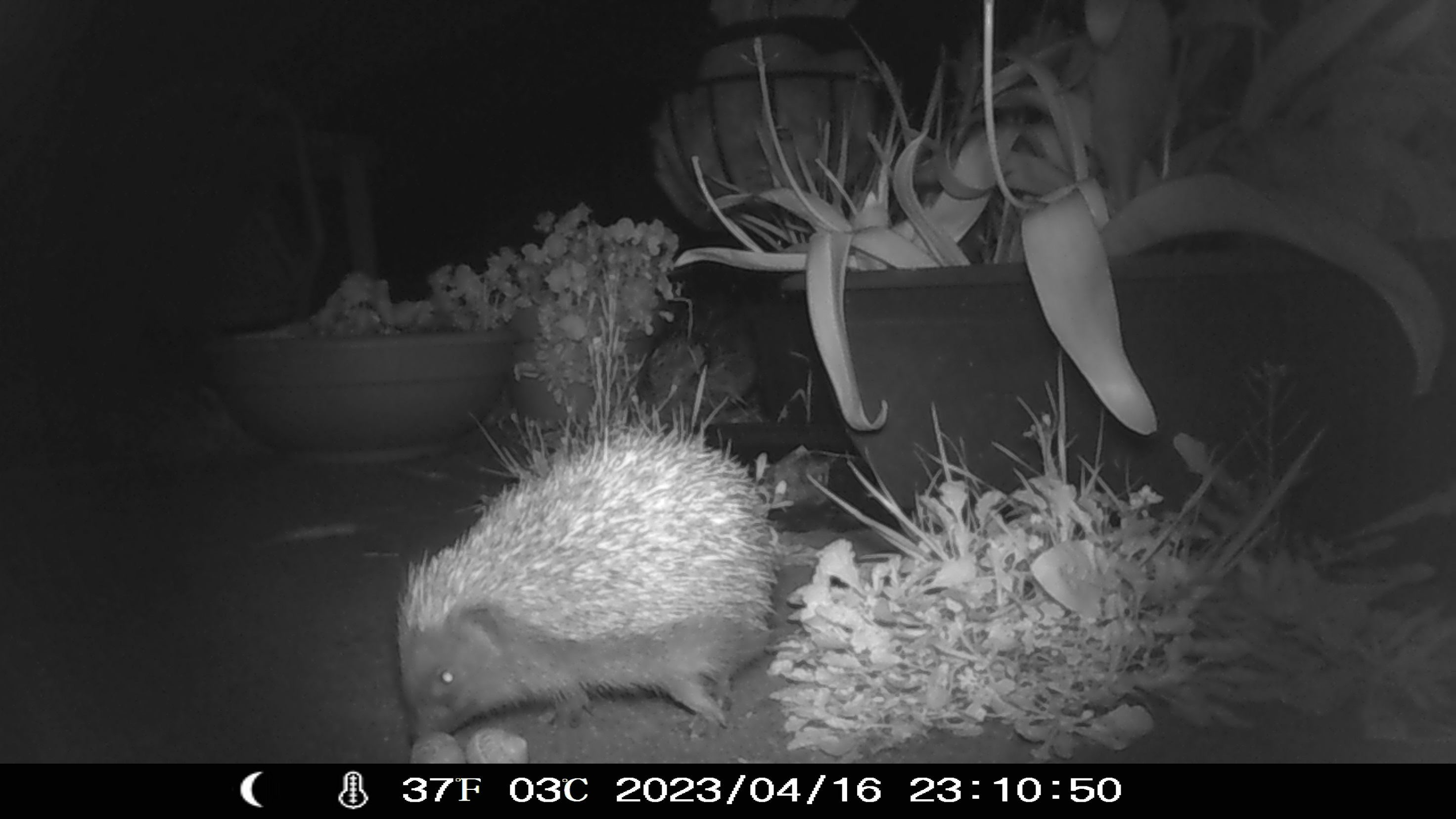
We are so thrilled to be having regular hedgehog visits to our suburban garden once again. We guess it is the same hedgie who comes most evenings. A couple of nights ago, its visit coincided with loud screeches from the Tawny in the wood. 


It seems the hedgehog is finding some good-sized snails ...


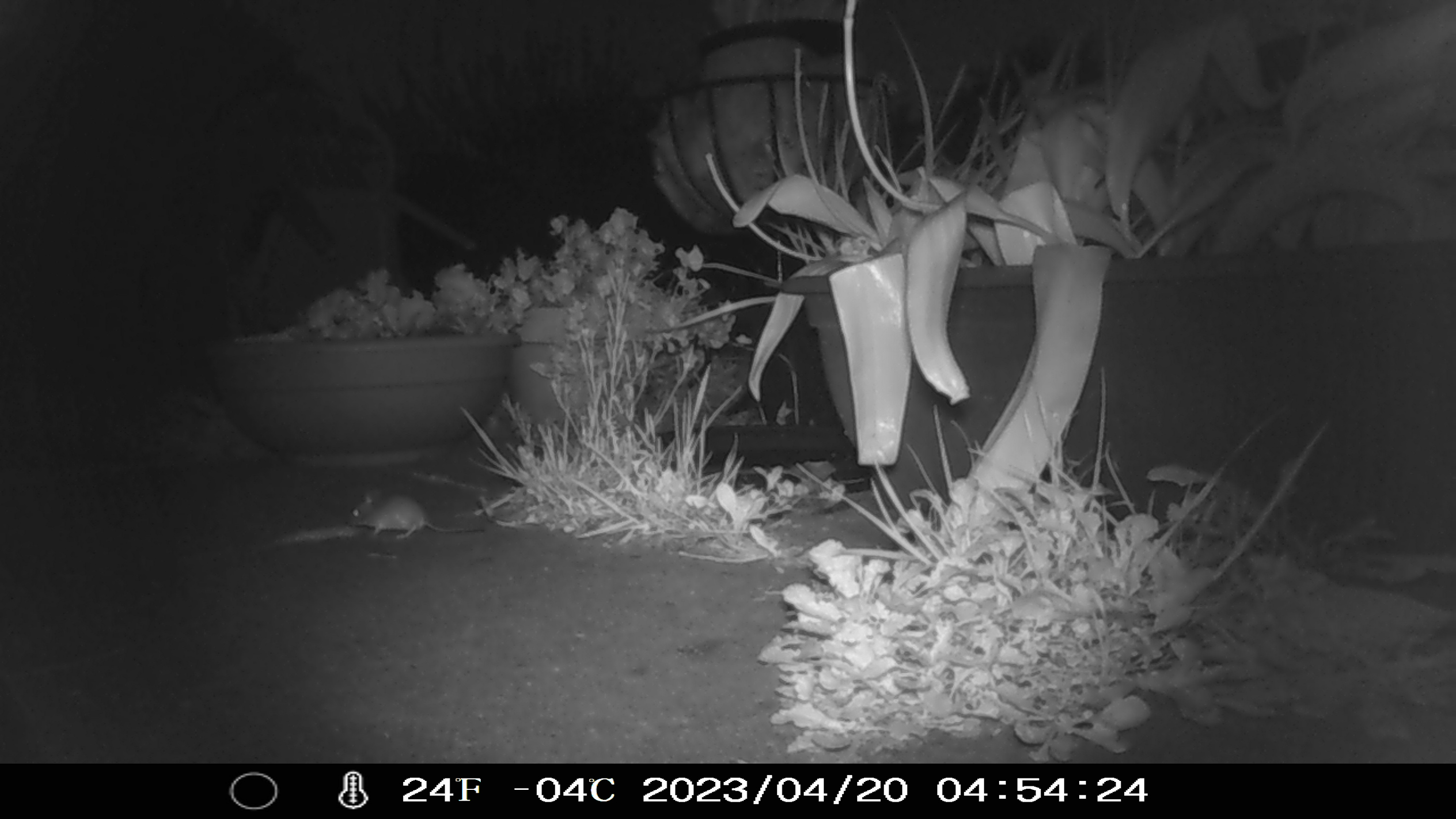
The photo below shows one of the other visitors ...

l


... Above: close-up of the mouse. 

And below: not on the trailcam, but who could resist this Robin?


Saturday, 28 January 2023

RSPB Big Garden Birdwatch 2023


The first Robin
  

We settled down this morning with binoculars, mugs of coffee, a pen and a recording sheet to do our bird survey. 

It was a reasonable, fairly nondescript, January morning here in suburban Suffolk. Our bird feeder was hung about with fat-filled coconut, peanuts and sunflower hearts. 

As ever, one or two of the 'regulars' failed to put in an appearance, notably the Great spotted woodpecker, Goldfinches and Wren; but never mind.

We spotted twelve species in the hour, which we felt was encouraging but not brilliant. Sadly, we hardly ever see Chaffinches, Bullfinches or Greenfinches in the garden these days.  

These are our results:


  1. Blue tit - 8 
  2. Woodpigeon - 8 
  3. House sparrow - 3 
  4. Starling - 3 
  5. Blackbird - 2 
  6. Dunnock - 2 
  7. Great tit - 2 
  8. Robin - 2 
  9. Long-tailed tit - 1 
  10. Magpie - 1

We also saw a Jay (11.) and a Feral Pigeon (12.), though these species do not appear on the RSPB checklist.  

I wonder how your count went. Perhaps you are still hoping to do one. 

Blue tit, Starling, Great tit

Blue tits, head to head

The action!

More Blue tits

Seed-time


Sunday, 7 February 2021

Snow on snow . . .

I have not ventured out beyond my patio door, but here are some of the avian visitors who came to our garden today. I gather there are Redwings and Fieldfare in the vicinity, but I have yet to see any this year. As for the snow, well, it is probably the most we have had since we moved in to our current house about nine years ago!


Tuesday, 2 February 2021

RSPB Big Garden Birdwatch, 2021


A bird watch has to begin somewhere, and mine began with the small but distinctive features of this beautiful Blue tit, almost hidden in a woody patch beneath one of our coconut feeders. The three images below show that other sightings were to follow.


As you can see, I finally succeeded in uploading my Big Garden Birdwatch Results for 2021 on to the RSPB site. There are not really any surprises on my list, although, typically, Long-tailed tits and Wood Pigeons have been around in much greater numbers since my counting hour. 

Ours is a medium-sized suburban garden. It is in close proximity to a Local Nature Reserve. We have a mix of trees, shrubs and the somewhat battered stalks of last year's long grass. Our sandy soil contains a fair amount of old builders' rubble. 

We usually put out fatballs with seeds or mealworms. We replenished our supply of these, adding a new canister of sunflower seeds, which attracted the Goldfinches. 

I wonder what birds you were able to count. Results can be uploaded, I believe, for the next few days (possibly until 19 February, but do check). Here are a few photos of our avian visitors, taken from behind double-glazing ...


female Blackbird

Long-tailed tit

Starling

Blue tit

Robin

Tuesday, 17 March 2020

Feed the Birds

Robin in our home patch, with currant blossom and forythia
In these days of fewer social gatherings, watching the birds and trying to keep abreast of the regulars becomes an increasingly important activity. And with birds pairing and beginning to build nests, there is plenty of action in the avian world. Our coconut feeders, with added sunflower seeds, particularly attract Blue tits, Robins, Great tits, Long-tailed tits and Starlings. Blackbirds have been known to head for them, too, but they prefer food sources like earth worms that can be pulled from the ground. 

Blue tit, one of many in the garden


Sunday, 23 February 2020

Female Hooded Merganser in Christchurch Park, Ipswich


Earlier in the week I had read a post on Facebook (David Quinton, Suffolk Birds, 21 February 2020) with photos of a female Hooded Merganser in Christchurch Park. We decided to take a look to see if the bird was still in the area. As you can see, she was, though the sunlight was intermittent and my photos are little more than record shots. I have read on the internet that the bird was introduced by the park authorities in the hope that this female would mate with a male, but I have not verified this suggestion.

What I do know is that a certain male Hooded Merganser recently went for a waddle down Tavern Street in the town centre, and had to be returned to the Christchurch pond by park rangers. According to the report in The Ipswich Star, the bird is almost certainly not a wild one.

Hooded Mergansers hail from North America, and the female in the photo is the first I have knowingly seen. Having watched a good number of Goosanders and Red-breasted Mergansers in the north of Britain, I was surprised at the small size of the bird in the park.


You can see her ginger 'tuft' in the photo below as she leaves the geese to their rest and heads out alone onto the water.


David thought he saw a Song Thrush in the garden a couple of days ago. I missed it, but was pleased to see this thrush in the park hopping about in the twigs.


The photo below shows one of the Coots we noticed.


There was a large queen Bumblebee on the pussy willow below, but by the time I had focused my camera, she had flown off. Just look at the pollen she left behind.


We noticed a few Manadrin ducks. There are usually some in or around the pond.


Christchurch Park is really very convenient for Ipswich. The church below, St Margaret's, in the town centre can be seen from the park. 


Flowers and blossom are beginning to grace us with their presence. I believe this flower, with its distinctive speckled leaves, is Lungwort or Pulmonaria.


The yew in the photo below is the oldest tree in the park, and has its own sign which explains that yews are among the hardest 'soft wood' trees. The tree is over 14m high and at least 600 years old.


What fascinating bark and trunk structures...


There were several Grey Squirrels darting about and skimming up and down trees. The ground was littered with what looked distinctly like half nibbled chestnuts.


Thomas Wolsey was an Ipswich man...


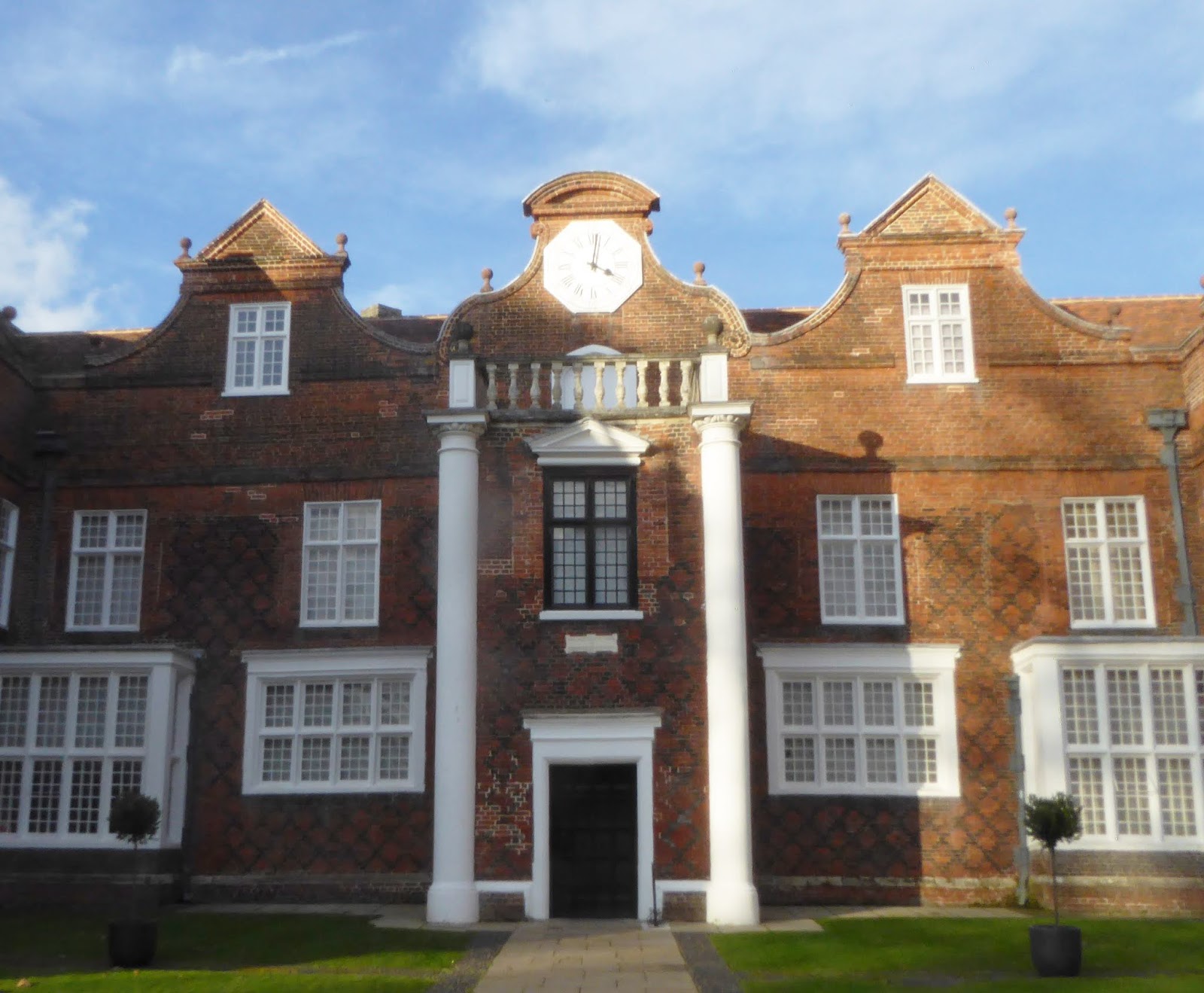
The picture below shows part of the facade of Christchurch Mansion, which is situated in the park. It was constructed on the 12th century site of Holy Trinity Priory, which failed to survive the Dissolution of the Monasteries under King Henry VIII.


This plaque with the date 1550 rather appealed to me.


My Latin is pretty rusty but if you think along the lines of making the most of your talents, you probably won't go far wrong...


It was good to have made the most of the sunshine...


...and to have enjoyed birdsong from the bushes. The Robin below was looking magnificent.


* * *


The light was fading by the time we reached home, but I was thrilled to find that our single Snowdrop had become a tiny drift...


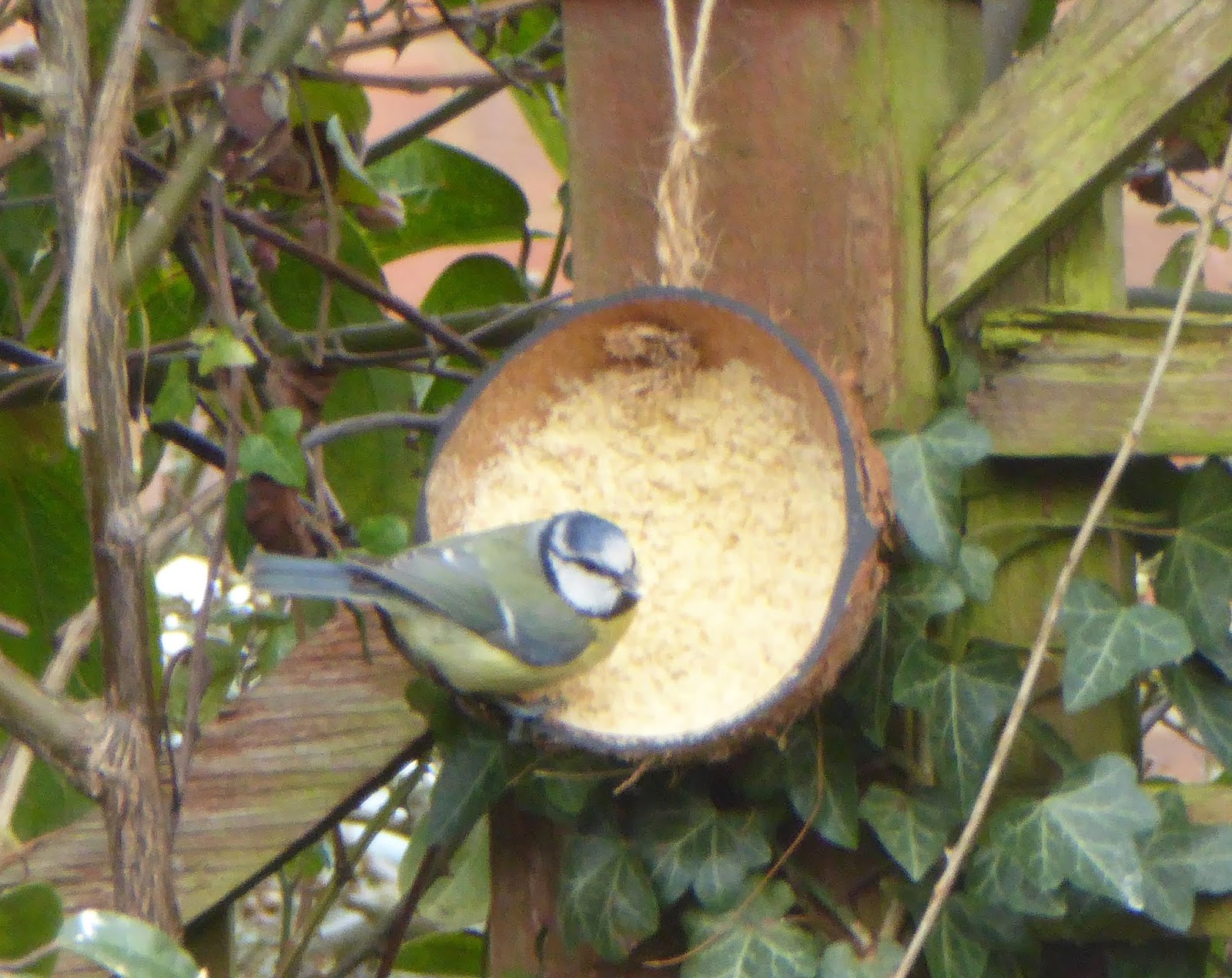
...and with a very early tulip braving the wind and a hungry Blue tit feeding from the coconut, it began to feel just a little like spring.