Showing posts with label Large Red Damselfly. Show all posts

Monday, 15 May 2023

Damselflies at Last


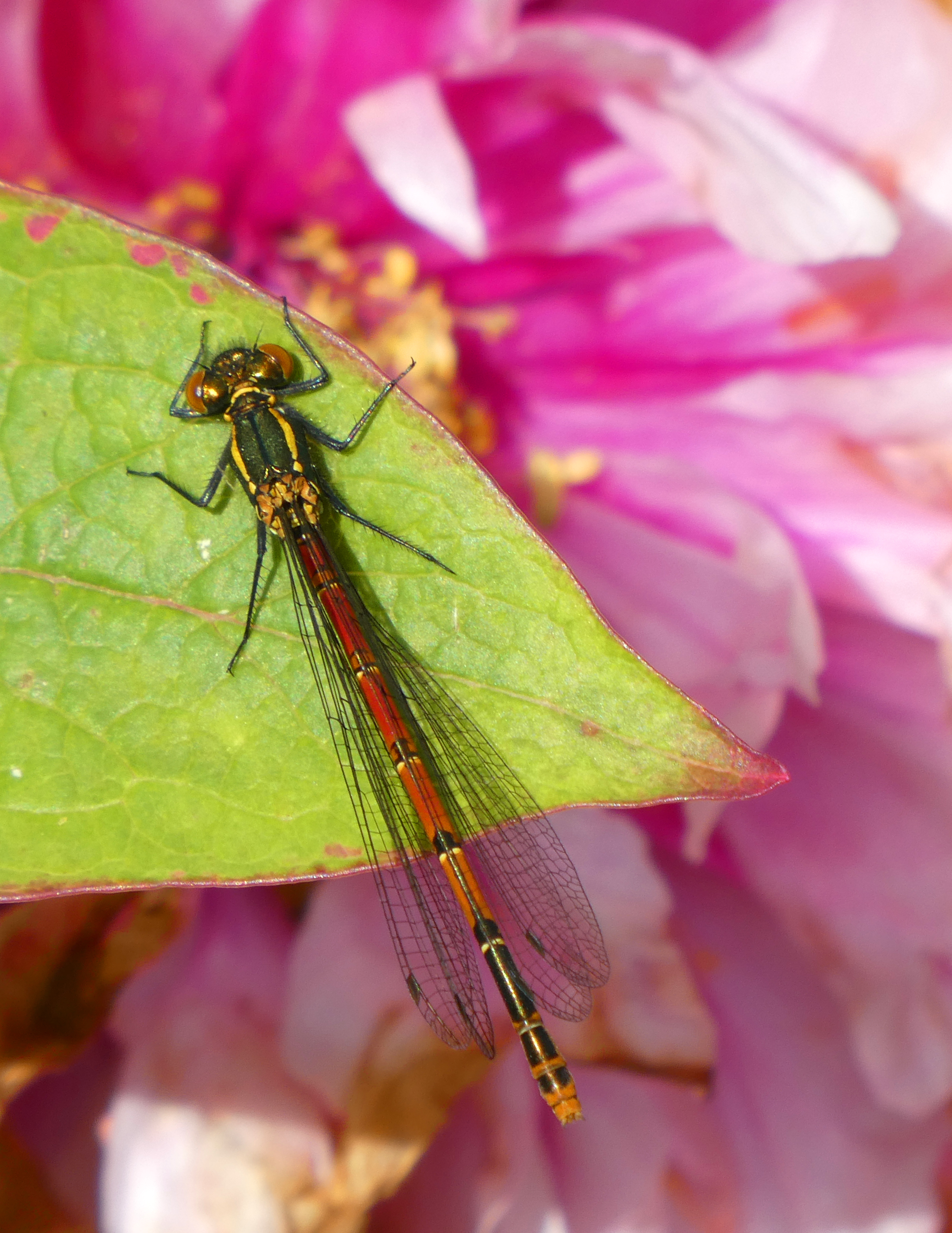
We seem to be entering 'damselfly season' at long last in my corner of Suffolk, UK. We spotted several Large Red Damselflies and one or two others in the grounds at Helmingham Hall. 


Helmingham Hall and moat


Not a Large Red ...

... but very well camouflaged.

 
Alder fly

I only see these strange flies with their veined wings on rare occasions, usually in watery locations, and I usually have to remind myself what they are. 
 

Bridge and parkland beyond


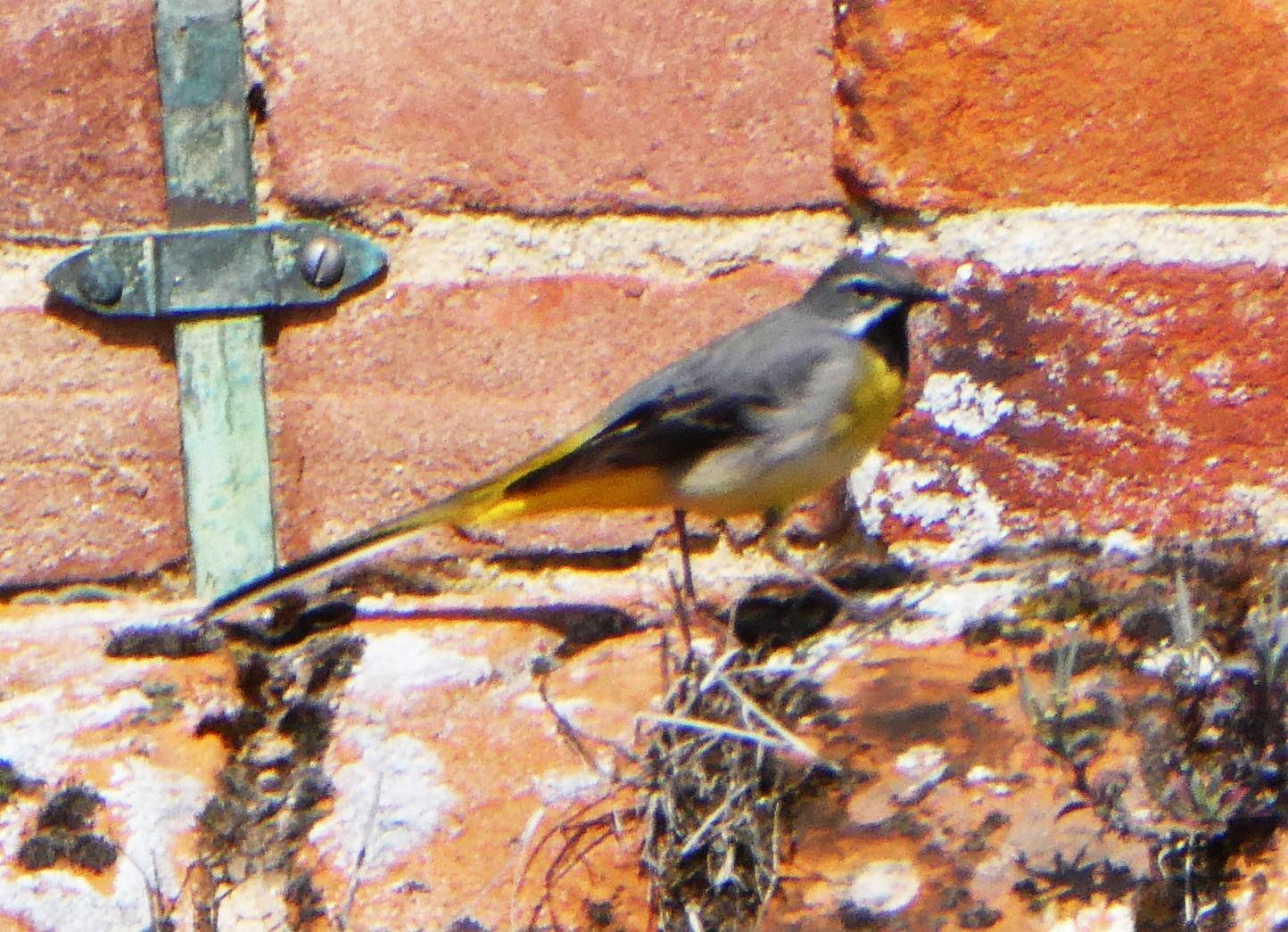
We don't see Wagtails (of any variety) very often in our neck of the woods so it was a particular joy to see these two.


The warm temperatures we experienced from time to time over the weekend made us feel that at last we were entering a late phase of spring. Today the heat has gone out of the sun once again, and although the sky has patches of blue, there is still a chilly northerly wind. It was a joy to see practically our first damsels of the year, but we had to look very hard to count a total of six butterflies at Helmingham, all skittish Orange Tips.

Saturday, 28 May 2022

Damsels, Dragons and Painted Ladies at Helmingham Hall


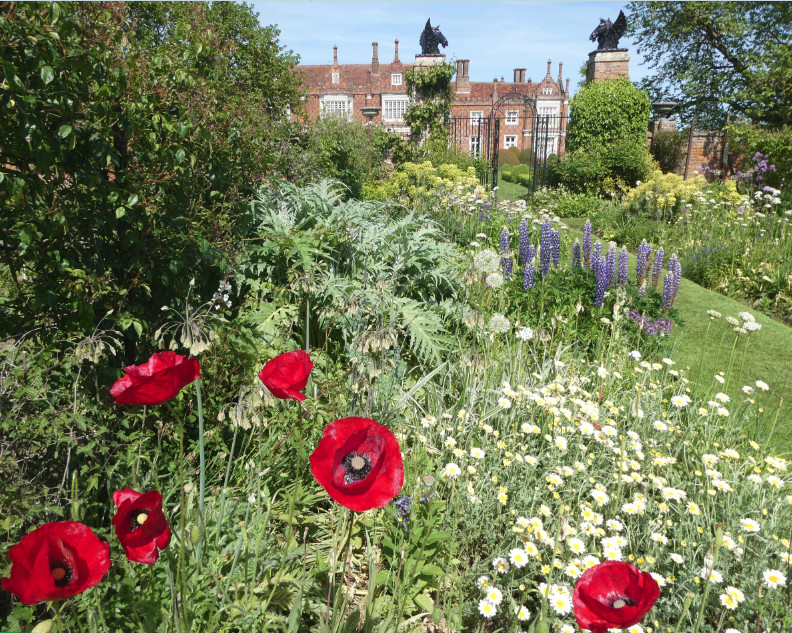
We visited the gardens at Helmingham Hall last weekend in the hope that we might be some early 'dragons' or 'damsels' around the moat. As you can see, the walled garden was looking very beautiful. 


We were thrilled to see our first Painted Ladies of the season, and since then we have had one in the garden at home. 


And yes! There were damselflies, many of them Large Reds like the one in the photo. 


We saw a couple of these Broad-bodied Chasers. The males are blue, but females and immature ones are a shimmering gold. 

Friday, 19 June 2020

Day 19 #30DaysWildCreativity: A Dazzle of Damselflies


This collage was made in response to Dr Miriam Darlington's #30DaysWildCreativity meme on the theme of the reciprocal relationship we have with nature. The idea was not (necessarily) to write about feeding the birds or planting vegetables but to tap into something that represented what we had done to connect with an aspect of the natural world. 


After a difficult spell I found myself drawn back and back, with camera and binoculars, to the WWT centre at Llanelli in South Wales. I became increasingly aware of the variety of 'damsels and dragons' that could be found on the bushes and at the edge of the scrapes on the reserve. I was keen to see how many species I could spot on each visit; and the more I looked for odonata, the more I became intrigued by the damselflies with their slim bodies, beautiful markings and shimmering iridescence. 

I don't recall seeing any Demoiselles on the WWT reserve, but these majestic insects remain a particular favourite to this day. It was not just the physical features of the Llanelli damselflies that made me want to photograph them: it was their eyes. Now, I don't want to enter the realms of anthropomorphism or speculation here, but I think you may agree that to peer into the eyes of a damselfly is like opening a window on a very distant past. 

 * * * 

My photos in the collage were taken in various places, some at WWT Llanelli and other locations in South Wales, some in Suffolk and one in Norfolk.


Monday, 18 June 2018

Insects in the Grounds of Helmingham Hall


I seem to have been chasing my tail a bit recently, so here are a few pretty pictures of Helmingham Hall and the insects in the grounds. You may have seen the hall on the Antiques Roadshow recently or perhaps on a previous Who do you think you are? programme. I tried to keep a casual eye open for bees on flower heads as we strolled around, particularly in the walled garden. But we saw some other insects, too ...


I think the creature above is a Variable Damselfly and the one below is an immature Large Red.


The moat makes an ideal environment for odonata.


Inside the walled garden we smiled at the topiary rabbits ...


and a frog prince!


It was good to see a few Meadow Browns, my first of the season.


I'm wondering if these were leaf or Flea Beeetles of some variety, possibly Crepidodera aurata


We noticed a couple of Broad-bodied Chasers on the vertical posts.


The next few photos show bees I noticed on the flower heads ...


This bee favoured a beautiful Delphinium.


You can see David here by the knot garden, with this fragrant patch of lavender and old-fashioned roses just in front of him. Despite the grey weather, the scent was one of pure summer!


Friday, 1 June 2018

Insects on our Flowers


There have been a few sunny spells here this week, though as I type it looks as if a thunder storm is not very far away. It has been lovely to see insects nectaring on the flower heads. The photo above and the two immediately below show (as you might guess) a Thick-legged Flower Beetle (Oedemera nobilis).


I can tell it is a male by the bulge in its femora.


This species seems to favour the southern half of the UK: I see I recorded these insects at WWT Llanelli back in 2011 when we lived in Swansea. I must add my latest sighting to my home-patch list.  


Bees have been enjoying the yellow Mouse-ear Hawkweed flowers...


...and the less wild Osteospermum (below).


I thought I would share a photo of a corner of our wild patch. It is a shady area, covered by Buddleia and Acer Negundo, the Box Maple. I can see strands of Hawthorn, nettles and a mass of Herb Robert. I suspect the insects (and snails) are there, but I have hardly seen any in this corner of the garden yet.


The photo below shows our insect houses a few weeks ago at the start of May. The only activity I have noticed so far is the scuttling of an occasional ant.


The photo below was taken yesterday: the pansies may not be wild (the mini-pond marks the entrance to the wild patch), but they are looking lovely and will hopefully prove attractive to flying insects of one sort or another.


I am so enjoying the Large Red Damselflies: I wonder whether the water feature is attracting them or whether it is the bramble bush!


I wonder if, like us, you enjoyed Chris Packham's Tree Slug moon graph on BBC Springwatch. This blog attempts to highlight the fact that nature is full of the wild and wonderful; and when we went outside a few minutes ago to look for bats, which failed to appear, we saw a couple of large Cockchafers (or perhaps Stag Beetles) floating around the sky, looking like airborne aliens.

Wednesday, 23 May 2018

A Second Large Red Damselfly


This is the second Large Red damselfly in our garden this year: I believe it is a male. Look at the silken threads. 


It is always a joy when the Ceanothus comes in to flower at the edge of the decking: you can see how much pollen has been collected already!

There were several Zebra Spiders moving around: the photo below shows one who paused momentarily from its jumping activities, so I grabbed my camera.


Friday, 11 May 2018

Garden First: Large Red Damselfly


What a thrill to discover this Large Red Damselfly in our garden the day before yesterday. It is the first Damselfly I have seen this year, and I hope several more will follow. The bronze colour on the thorax is indicative of immaturity. We have a tiny water feature at the entrance to our 'wild garden', which is in close proximity to a designated LNR (Local Nature Reserve), offering mixed habitats including a stream and an area of woodland.

I checked my most up-to-date list of species seen in our home patch, and it seems I need to add this Large Red. I had a feeling I had seen these in the garden once or possibly twice before, so it may be that they simply failed to get on the list.

'HP' in my list below is for 'home patch'. Dates with a green background are first sightings (in 2017). Dates with an orange background are first sightings (in 2018). I hope we will see our first 'home patch' bats again before long. 

The list began with Lucy Corrander's Tree Following meme in mind. I am continuing it for my own interest, and think I will now omit unidentified creatures. There have, for example, been plenty of unidentified moths over the last two or three years. With identification in mind, I perhaps need to post more on iSpot this summer.

Avian sightings - unlike the Big Garden Birdwatch, a bird seen clearly from the house or garden counts for my purposes. We have, for example, yet to see a Grey Heron landing in our home patch, but we have had several good sightings of these birds flying over in the direction of the local nature reserve, one road away. We have often heard the local Tawny Owl, but I am not counting 'birds heard' (unless they are also seen) at present.

  • HPb1   Great Spotted Woodpecker
  • HPb2   Great tit
  • HPb3   Long-tailed Tit
  • HPb4   Blackbird  
  • HPb5   Song Thrush   
  • HPb6   Blue tit 
  • HPb7   Robin
  • HPb8   Magpie 
  • HPb9   Wood Pigeon
  • HPb10 Dunnock  
  • HPb11 Starling 
  • HPb12 Carrion Crow 
  • HPb13 Goldfinch
  • HPb14 Jay 
  • HPb15 Green Woodpecker
  • HPb16 Wren 
  • HPb17 Bullfinch [[19 January 2017] 
  • HPb18 Sparrowhawk
  • HPb19 Mallard
  • HPb20 House Sparrow 
  • HPb21 Chaffinch
  • HPb22 Grey Heron 
  • HPb23 Collared Dove 
  • HPb24 Coal tit
  • HPb25 Redwing [[20 January 2017] 
  • HPb26 Kestrel  [[8 June 2017] 

Mammal sightings
  • HPm1 (?Wood) Mouse
  • HPm2 Bat ... [first 2015 garden sighting 7 May 2015] [Apr/May 2015]  [[22 January 2017] 
  • HPm3 Shrew 
  • HPm4 Grey Squirrel  [Jan/Feb 2016] [Feb/Mar 2016] [Mar/Apr 2016] [Jul/Aug 2016] [2017]
  • HPm5 Stoat
  • HPm6 Hedgehog

Insect sightings
  • HPi1 Small Tortoiseshell Butterfly [March 2014] [[27 February 2017] 
  • HPi2 Buff-tailed Bumblebee [March 2014] [Jan/Feb 2016] [Mar/Apr 2016] [2017]
  • HPi3 Brimstone Butterfly [April 2014]
  • HPi4 7-spot Ladybird [April 2014] [Oct 2014] [Apr/May 2015] [Jul/Aug 2015] [Sept/Oct 2015] [Mar/Apr 2016]
  • HPi5 Skipper Butterfly [July 2014]
  • HPi6 Meadow Brown Butterfly [July 2014] [Jul/Aug 2015]
  • HPi7 Large White Butterfly [July 2014] [Jul/Aug 2016]
  • HPi8 14-spot Yellow Ladybirds [July 2014]
  • HPi9 Small White Butterfly [May 2014] [Apr/May 2015] [Sept/Oct 2015 - caterpillars]
  • HPi10 Orange tip Butterfly [May 2014]
  • HPi11 Harlequin ladybird  [May 2014] [October 2014] [Sept/Oct 2015]
  • HPi12 Garden Chafer (Phyllopertha horticola) [June 2014] [June/July 2016] [18 May 2018]
  • HPi13 Ruby-tail Wasp [June 2014] [May/June 2015] [May/June 2016] [[21 May 2017] 
  • HPi14 Blackfly [June 2014
  • HPi15 Marmalade Hoverfly [July 2014] [Jul/Aug 2015] [Jul/Aug 2016]
  • HPi16 Shield bug [July 2014] [Apr/May 2015]
  • HPi17 Migrant Hawker dragonflies [July 2014]
  • HPi18  Gatekeeper Butterfly [Jul/Aug 2016]
  • HPi19 Comma butterfly [August 2014] [June/July 2016] [2017]
  • HPi20 Red Admiral butterfly [August 2014] [October 2014] [Jul/Aug 2015]
  • HPi21 Peacock butterfly [August 2014] [Jul/Aug 2015] [Nov/Dec 2015] 
  • HPi22 Green bottle flies [August 2014] [May/June 2015]
  • HPi23 Ants [August 2014] [Apr/May 2015]  [May/June 2015] [Jul/Aug 2015] [Sept/Oct 2015 ] [Jun/July 2016] [2017]
  • HPi24 Squashbug aka Dock Bug, (Coreus marginatus ) [August 2014] [May 2018, mating]
  • HPi25 Birch Shieldbug (late instar?) [September 2014]
  • HPi26 Lacewing [October 2014] [Sept/Oct 2015]
  • HPi27 Cereal Leaf Beetle [Apr/May 2015]
  • HPi28  Painted Lady [2018]
  • HPi29 Rosemary Beetle [[Sept/Oct 2015] [May/June 2016 - four] [May 2017]
  • HPi30 Hawthorn Shieldbug [May/June 2015] 
  • HPi31 Forest Shieldbug (Pentatoma rufipes) [Sept/Oct 2015] 
  • HPi32 Early Bumblebee [Mar/Apr 2016] 
  • HPi33 Species of Miridae [Mar/Apr 2016]  
  • HPi34 Cranefly [May/June 2016] 
  • HPi35 Crossocerus, wasps family Crabronidae [May/June 2016] 
  • HPi36 Wasp Beetle (Clytus arietis) [May/June 2016]
  • HPi37  Tree Bumblebee (Bombus (Pyrobombus) hypnorum) [May/June 2016] 
  • HPi38  Moth Least Black Arches (Nola confusalis) [May/June 2016] 
  • HPi39  Holly Blue Butterfly  [[26 May 2017]  
  • HPi40 Dark Bush Cricket (nymph) [[18 May 2017]  
  • HPi41 Common Cockchafer  [[18 May 2017]  
  • HPi42 Scorpion Fly [May2017] [[23 May 2017]  
  • HPi43 Soldier Beetle (Cantharis rustica [2017] [[23 May 2017]    [13 May 2018]
  • HPi44  Cabbage Bug (Eurydema (Eurydema) oleracea)  [2017]  [[9 June 2017]  
  • HPi45 Light Brown Apple moth (Epiphyas postvittana) [2017] [[23 May 2017] 
  • HPi46 Large Red damselfly (Pyrrhosoma nymphula)   [9 May 2018] 
  • HPi47  Common Blue butterfly (Polyommatus icarus  [11 May 2018] 
  • HPi48  Speckled Wood butterfly (Pararge aegeria  [15 May 2018] 
  • HPi49  Ruby Tiger moth (Phragmatobia fuliginosa  [18 May 2018] 
  • HPi50  Mint Moth (Pyrausta aurata  [24 May 2018] 
  • HPi51  Mullein Moth larva (Cucullia verbasci  [14 June 2018] 
  • HPi52  Field Digger Wasp   [14 July 2018]

Molluscs

Arachnids