Showing posts with label Hemiptera. Show all posts

Monday, 6 August 2012

Nature Reserves (3): Dunwich Heath and Minsmere

We failed to notice any particularly unusual birds, but we were able to notch up 21 Gatekeeper butterflies at Minsmere during the allocated 15 minutes for the Big Butterfly Count. They were out in the intermittent sunshine, enjoying the brambles.

I also saw a single Red Admiral ...

... and this unidentified Dragonfly. It was very active and finally settled high up a tree. I was leaning back as far as possible and using my zoom ... hence the wobble and poor quality photo! I think it is a hawker of some kind.


Our most unusual sighting of the afternoon at Dunwich Heath (National Trust), and indeed a first for me, was this Gorse Shieldbug nymph. I believe it is related to the Stinkbug family. Incidentally you might be interested to see a Red-legged Shieldbug in the Cabinet of Curiosities here. You might also like this British bug guide to hemiptera.
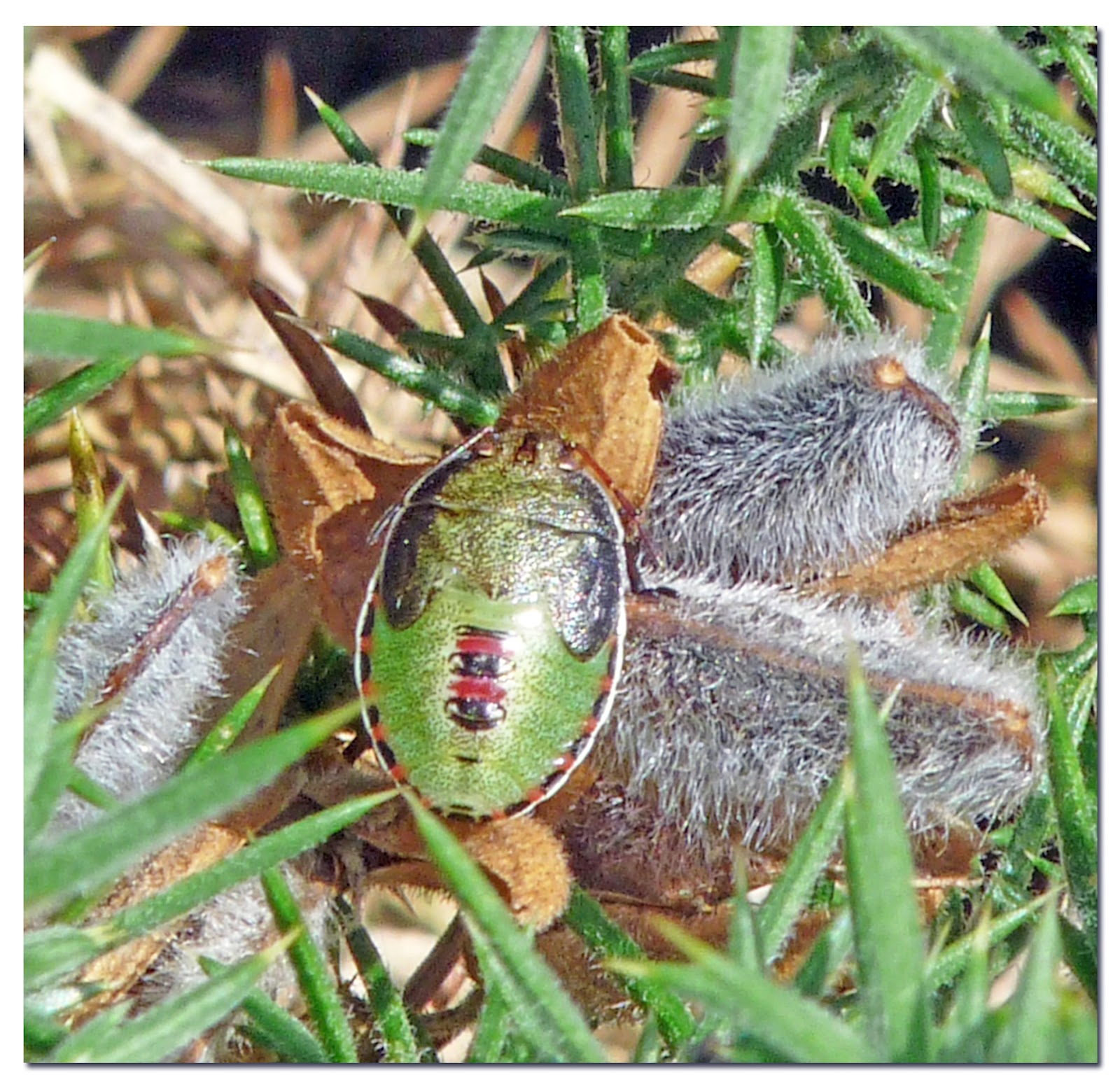
(Piezodorus lituratus)

I think the last bug I saw in nymph form was in Pylos ... here

We also noticed a few lively Cinnabar Moth caterpillars on the ragwort ...


... and what seemed to be a Brown-tail Moth tent on the heath ...

Previously noticed here at Spurn Point
And finally, a photo to help you find your bearings if you are not familiar with these two superb Suffolk wildlife sites ...

Thursday, 17 February 2011

Eye-catching Insects (2): Spilostethus pandurus ~ a Milkweed Bug

Seen at Messene in the Kalamata area of Greece
I posted the above photo on our return from Pylos in the Peloponnese last autumn, having failed in my attempts at identification. The creature was seriously 'on the move' so it was a case of click or miss, hence the fuzzy photo.

The identification continued to puzzle me until earlier this week Shelly from MOBugs (Missouri, USA) came to my rescue. A friend of hers was able to tell me that the creature is the nymph of a Seed Bug, the Spilostethus pandurus. It is more commonly known as the Milkweed Bug and belongs to the order of Hemiptera, sub-order of Heteroptera - and is from the family of Lygaeidae.

You can read about the hemimetabolic life cycle here. It certainly had not occurred to me that I was watching a nymph. There is a much better photograph by Normand Mlaure (you may have to scroll down), and there is another here, with only one ring i.e. an 0 rather than a figure of 8, on its back. There is further example here, with a cluster two photos down (by John Cravatta) of the not dissimilar Oxycarenus lavaterae.

For another cluster of these creatures (this time in Spain and taken by fturmog), take a look here. They have also been seen in the Algarve in Portugal.

 *

We saw some other colourful creatures in Greece. You may remember these two from my previous Bug post . . .


Postscript: 23 Feb 2011: do take a look at Seabrooke's Milkweed Bugs here.