Showing posts with label Avocet. Show all posts

Monday, 11 April 2022

RSPB Boyton Marshes and (views of) Havergate Island


We decided to revisit RSPB Boyton Marshes yesterday afternoon, a Suffolk nature reserve we have been to once, or at most twice, in the past. We had hardly left the farm, the cattle and the car park behind when we saw Avocets. We have watched these elegant birds a few times over here in East Anglia (and have even seen chicks at WWT Welney); but when I was a teenager in Norfolk, they were fighting for survival. Many of you will recognise the Avocet from the RSPB logo. 

We saw some other beautiful birds on the reserve: Mute Swans, Teal, Curlew, Grey Heron and Marsh Harrier, to name but a few. We also had good views across to Havergate, Suffolk's only island. You can see the western end of the island in the photo below (you can click on the photo to enlarge it), with the spit of Orford Ness on the horizon in the far distance. 

I love islands and was thrilled to locate this one. It is run by the RSPB for the benefit of wildlife. Visitors arrive on boats from Orford, bringing their own refreshments as there are no food or drink outlets. There are, however, a few hides to facilitate bird-watching activities.


The tidal flats on the salt marsh began to fill up as the tide turned during the afternoon. 
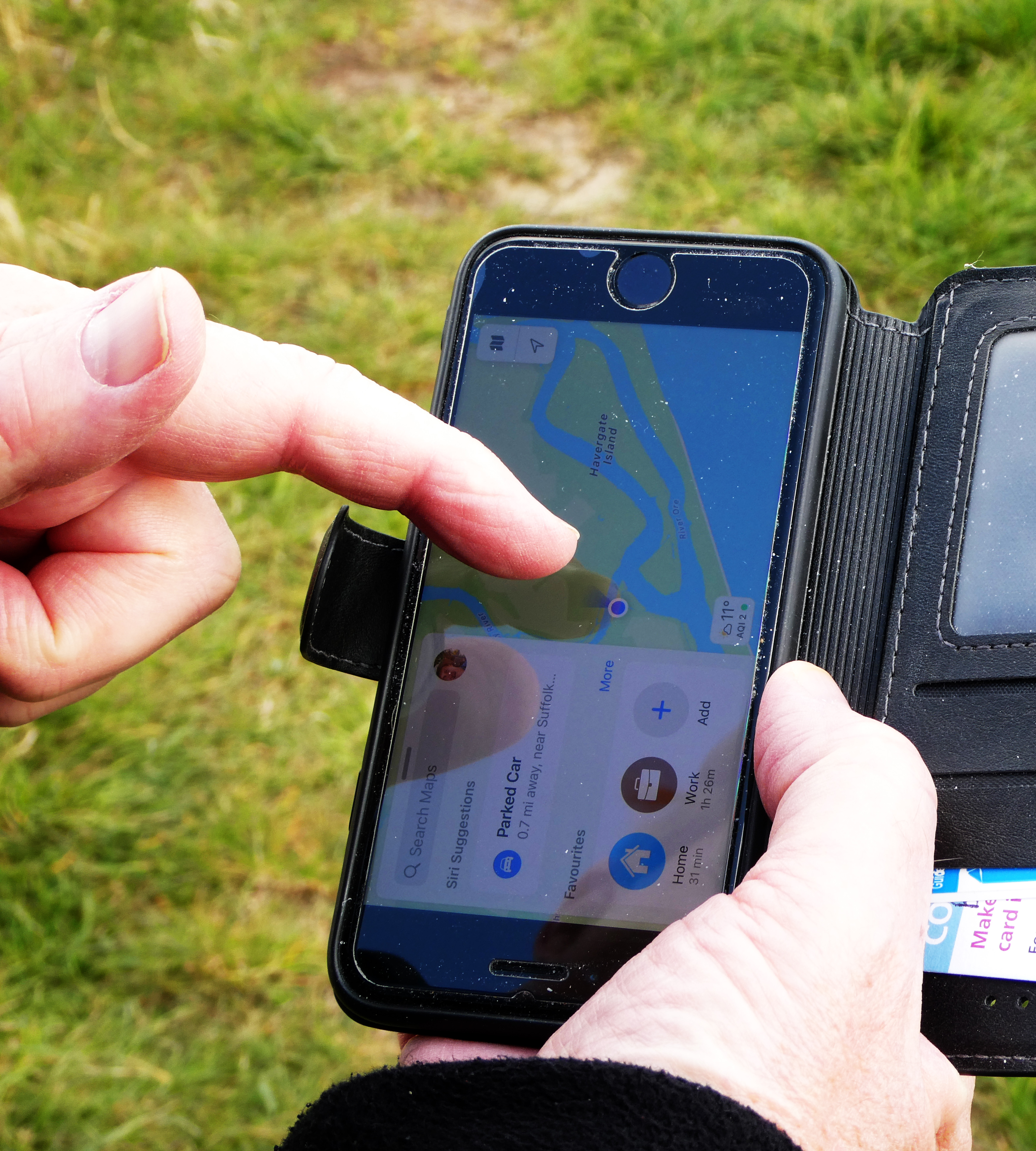
 

David was able to show me how the island nestles behind the spit of Orford Ness, the green strip on the right in the map on his iPhone screen.


You can see one of the hides in the photo above. This was taken with my zoom lens extended in strange shadowy light. We had a mix of sun, showers and even a couple of hailstones. I hadn't even noticed this particular Curlew when I took the photograph.

We were delighted to see a variety of ducks on the mainland reserve. These were near the Avocets. The ducks we saw included the Shelduck, ...


 ... the Eurasian Teal (a female in this case,
with her vibrant green streak) ...


... and the Shoveler.


During the course of the afternoon we encountered several Grey Heron.  


You can see from the next photo why it is such an ideal landscape for ducks.


The area around Boyton Marshes is very varied, which means there are a number of different habitats within and around the reserve. I noted the following (and our total of 15 species of bird sightings, counted in about an hour in a casual kind of way):

  • inland ponds (Teal, Shoveler, Shelduck, Avocets, geese)
  • farmyard with cows and bushes (Chaffinch, Carrion Crows)
  • reedbeds (where we could hear birdsong. A group of birders had their scopes trained on these)
  • estuary, Butley Creek (Curlew, Little Egret, Redshank) 
  • grassy sea wall (Marsh Harrier overhead, Oystercatcher at base)
  • fields, ?water meadows (a flock of Mute Swans, Greylag Geese, Canada Geese, Lapwing)
  • island, Havergate Island (gulls on roof of a hide, though I couldn't see which)
  • shingle spit, Orford Ness - too far out to see specific species
  • North Sea - too far out to see specific species


The photo above shows the grassy bank to the right. On the left you can see that there are reedbeds and a watercourse receding into the distance. Butley Creek, a tributary of the river Ore (as in Orford), can be seen from the top of the bank, as shown in the next photo.


The ruined building above constitutes the scant remains of Boyton Dock. For a fairly short period in the mid-seventeenth century, substantial amounts of 'potter's clay' were loaded on to ships from this part of the estuary. Some of the clay was used in America and the Netherlands while some was used in the London Delftware industry. The mid-nineteenth century saw Boyton sending coprolite to Ipswich by barge for the manufacture of fertiliser. I spent a year of my life in Ipswich as a resident of Coprolite Street.

There are, in fact, several ruined buildings in this part of Boyton and its environs, many linked to defensive measures. The name 'Boyton' stems from 'Bay Town', the bay being nearby Hollesley. Boyton was one of the Suffolk locations picked for the filming of The Dig

The photo below shows the view from the Dock, with some of the more distant ruins on the eerie spit of Orford Ness beyond the far bank (and over the water, which it hides). 


I felt a few hailstones on my face as this Marsh Harrier flew high above our heads ...


We took a final look at Havergate Island and turned for home. 


Our view of the creek once we had turned round.


Wednesday, 15 May 2019

North Norfolk


My previous post contains some of our Broadland photographs. This post has the area around the North Norfolk coast as its focus. It is always a joy and a thrill to see an Avocet, symbol (and success story) of the RSPB. We spent a fair amount of time at the wonderful Norfolk Wildlife Trust centre at Cley. Sadly we missed a book launch by Mark Cocker which had taken place there the day before our arrival. 

We love the reedy area around Arnold's Marsh: we have watched Bearded Tits and Reed Buntings here in the past.


I spent my teenage years in Norfolk, and this photo encapsulates those memories for me - long empty beaches of shingle, full of rugged beauty, perfect for wildlife but rather chilly!


The reedbed area on the landward side is equally compelling.


We paused for a while to watch this rather large Little Egret fishing.


Look at those feet...


There were various ducks on the saltmarsh, including this Shelduck.


The church below is in Brancaster and doubtless some of the masonry has been reworked from Brandodunum, the Saxon Shore fort built by the Romans.


We enjoyed watching the waders at Brancaster Staithe: the North Norfolk coast has so many hidden corners. 


Late afternoon: Brancaster Staithe


The photos below show Blakeney...


The sun came out after a dark cloud: I love the subtle saltmarsh colours. 


Another day began with quick visits to NT Blickling and Febrigg.

Part of the front of Felbrigg Hall


There were some very relaxed chickens in the walled garden at Felbrigg - and I loved their house!


The honey bees were certainly not in relaxed mode!


I love the hives, and what a beautiful flint wall behind. 


With blossom like this, I imagine the quality of the pollen must be superb! 


The photo below gives an impression of the vast beach at Holkham, a beach on the edge of The Wash, with sand, shells in profusion and estuarine mud.


You approach Holkham beach through a path between the pine trees. The hall and parkland estate, home of Thomas Coke of the Agrarian Revolution (as it was called in my school days), is just across the road.

I realise I have posted a rather random selection of photos. My next post will move inland again to the Yare valley (Mark Cocker's Crow Country), where I spent my teenage years - and where we spent a bit of time on this recent break.

Thursday, 27 April 2017

Three Days in North Norfolk - 2

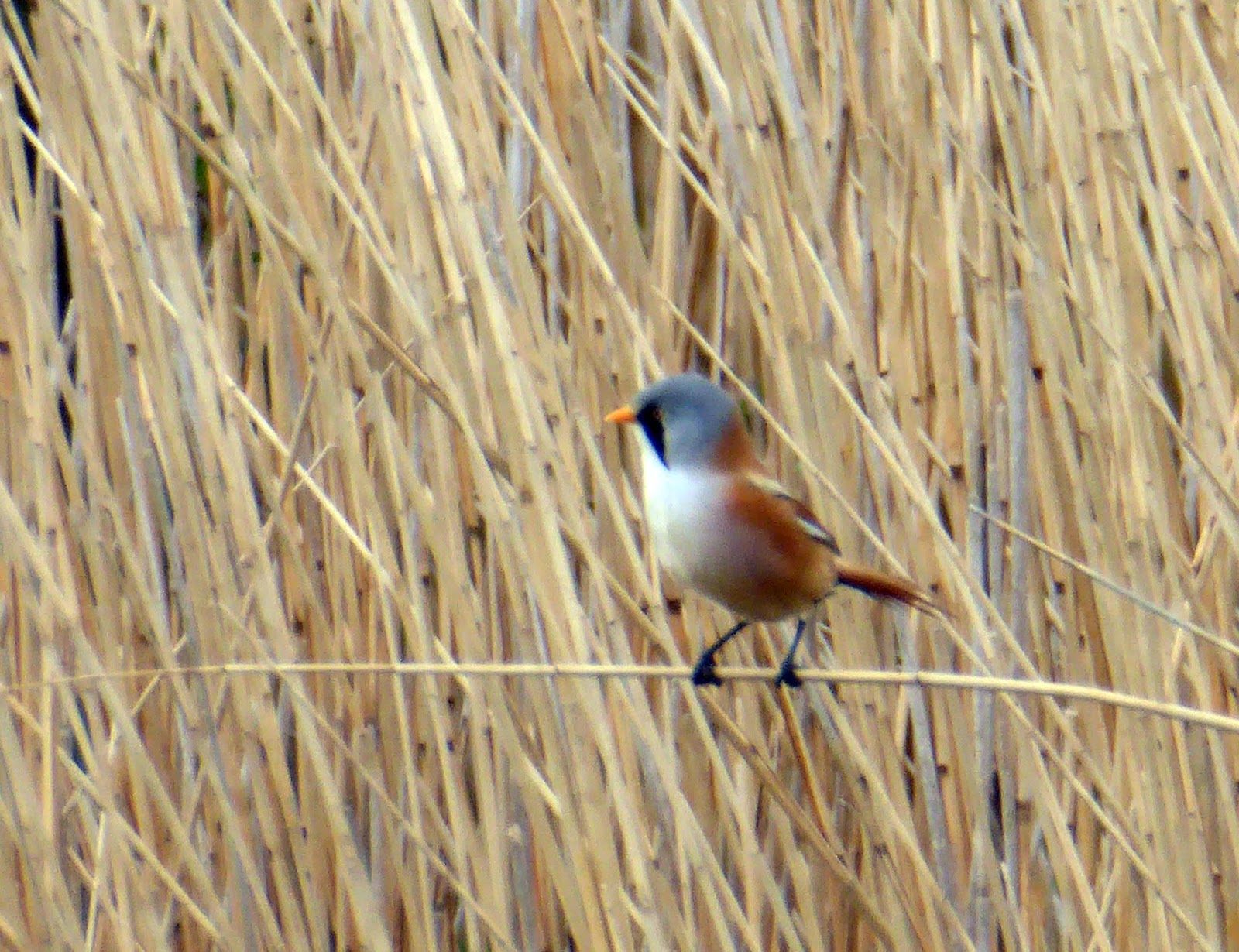
Bearded tit
I mentioned that I would add some more Cley photos in a second post, so here they are. We were thrilled to see Bearded tits in the deep reedbeds with the Sedge Warblers. We stood poised on the path, listening for the ping that often precedes their presence. These beautiful birds are extremely elusive!


But it was not just tits and warblers in among the reeds. It was lovely to see a few butterflies, including this Peacock in a sheltered spot below the raised path to Cley from Morston Quay. 


We were just about to enjoy our picnic lunch when I noticed what I took from a distance to be a female Orange Tip, but when I drew near I realised it was actually a Green-veined White, another seasonal first for me. We actually saw several flying about near a patch of dandelions. 


Unlike the Peacock butterfly, this black beetle was strolling along the top of the bank in the sunshine. 


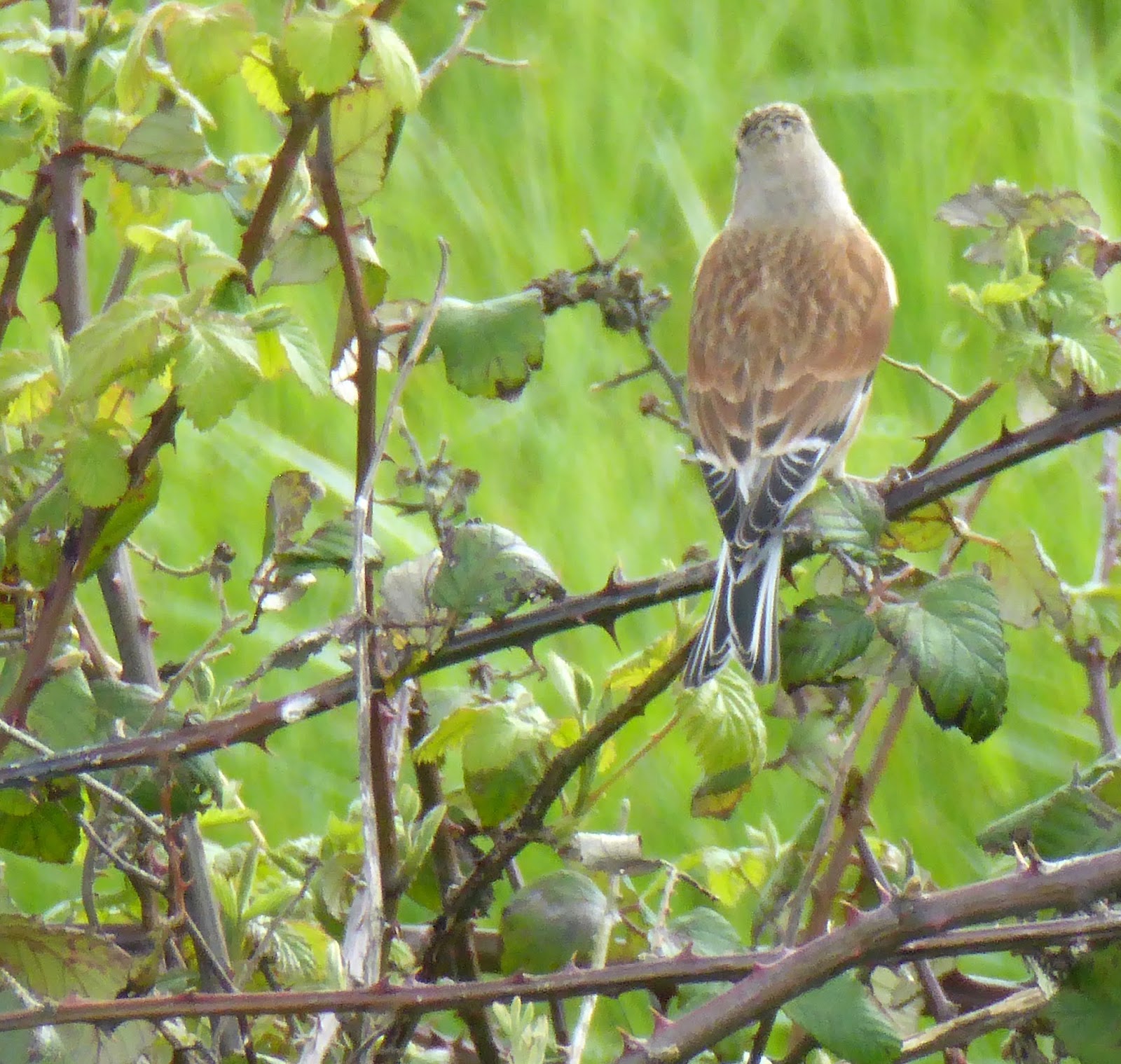
David noticed a streak of red in the brambles at the edge of the raised path, and it turned out to be the chest of a Linnet. I think this is my best view to date of a Linnet's back. What lovely pied markings on the tail.


There are usually quite a few Avocets on the Cley reserve. I was so hoping to take a photo of one in flight, but this will have to wait for another occasion. I see it is the 70th birthday of RSPB Minsmere (down the coast, into Suffolk) this weekend and that there is a new Avocet mug to mark the occasion. 


These Bearded tit pictures below are definitely 'click-and-shoot' shots, but who could resist these magnificent little birds? And it seems to me that the 'beard' is definitely more of a moustache!


There were several ladybirds along the path to the sea at Cley. 

 I am puzzled by this one, though, as it looks very like an Eyed Ladybird
but I don't think the habitat is quite right 
as these insects are usually found on pine trees and other conifers. 
Another insect for the UK Ladybird Survey...


I love this landscape of mere, reedbed, sea and sky. Tides and migrant birds come and go, just like the light and the shadows. 


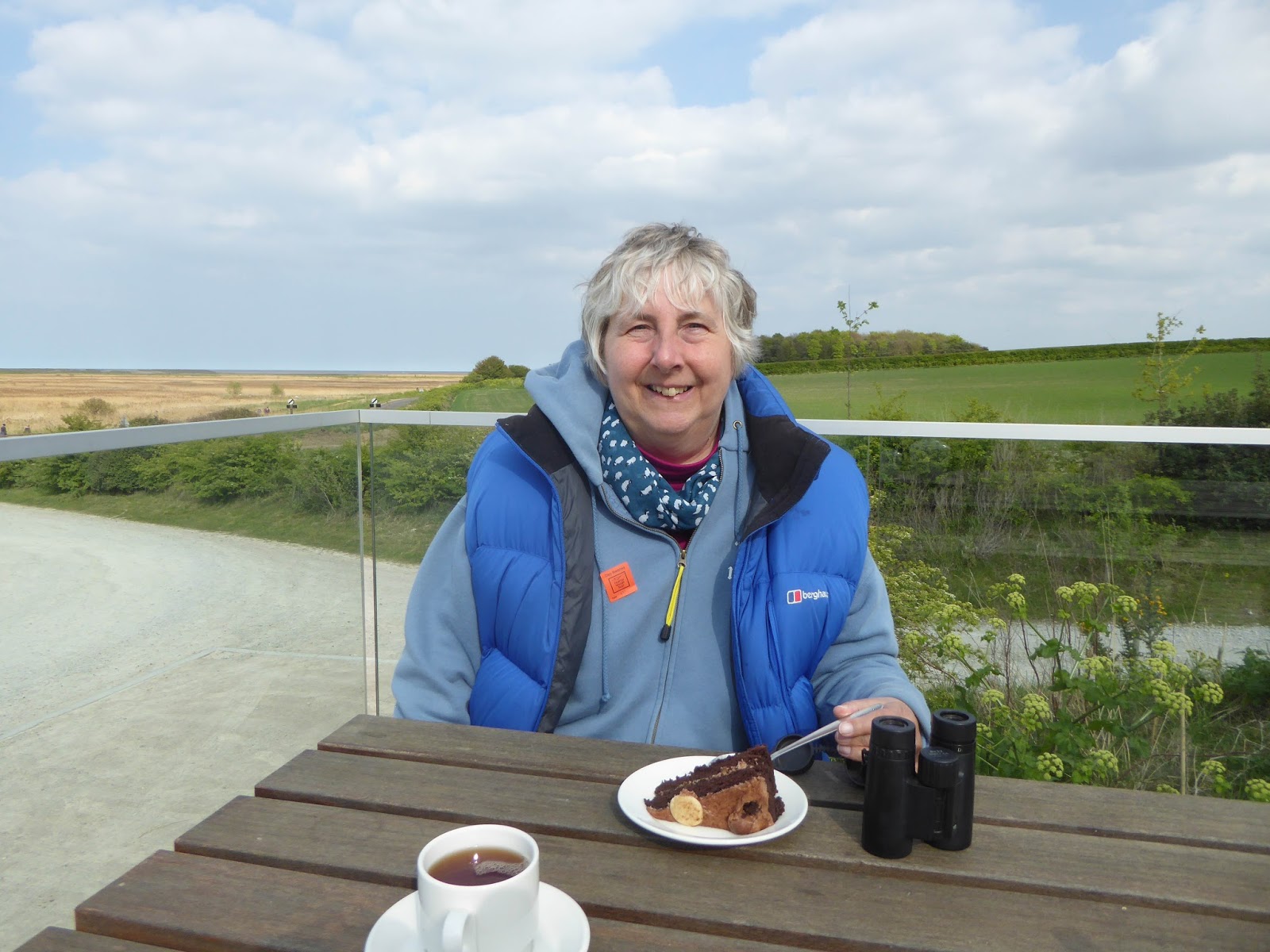
There was just time for a slice of malteaser cake on the terrace at NWT Cley before heading home to Suffolk.


Species list to follow, but do click on the yellow background and take a look at a wonderful post on North Norfolk from fellow blogger, Adam Tilt.