about the Larch I am watching.
This tree is in Carmarthenshire, South Wales, UK.
 |
| This is the Larch. It is still early in the season, but there are small signs of new growth. |
 |
| This one is a male (with red mark on back of neck - not visible here): I wonder if we will see a female one day ... |
 |
| Blue tits - and a female Siskin (upside down). |
 |
| Note the fresh growth on the larch branch. I think this a second female Chaffinch ... |
For those who may not know, the Larch is a deciduous conifer from the
Pinaceae family. We usually think of conifers as evergreen, but this species loses its needle-like leaves each autumn. The tiny cones ripen approximately 8 months after pollination. There are Eurasian and North American species. Larch wood is waterproof and hard-wearing - and used in the boating industry. It is also used for the building of houses in Central Europe. Scottish cabers, used in the sport of 'Tossing the Caber', are made from Larch.
 |
| The 'usual suspects', the Starlings, arrived on cue. |
 |
| The male Blackbird preferred rustling around below the tree. |
 |
| A hungry Chaffinch, |
 |
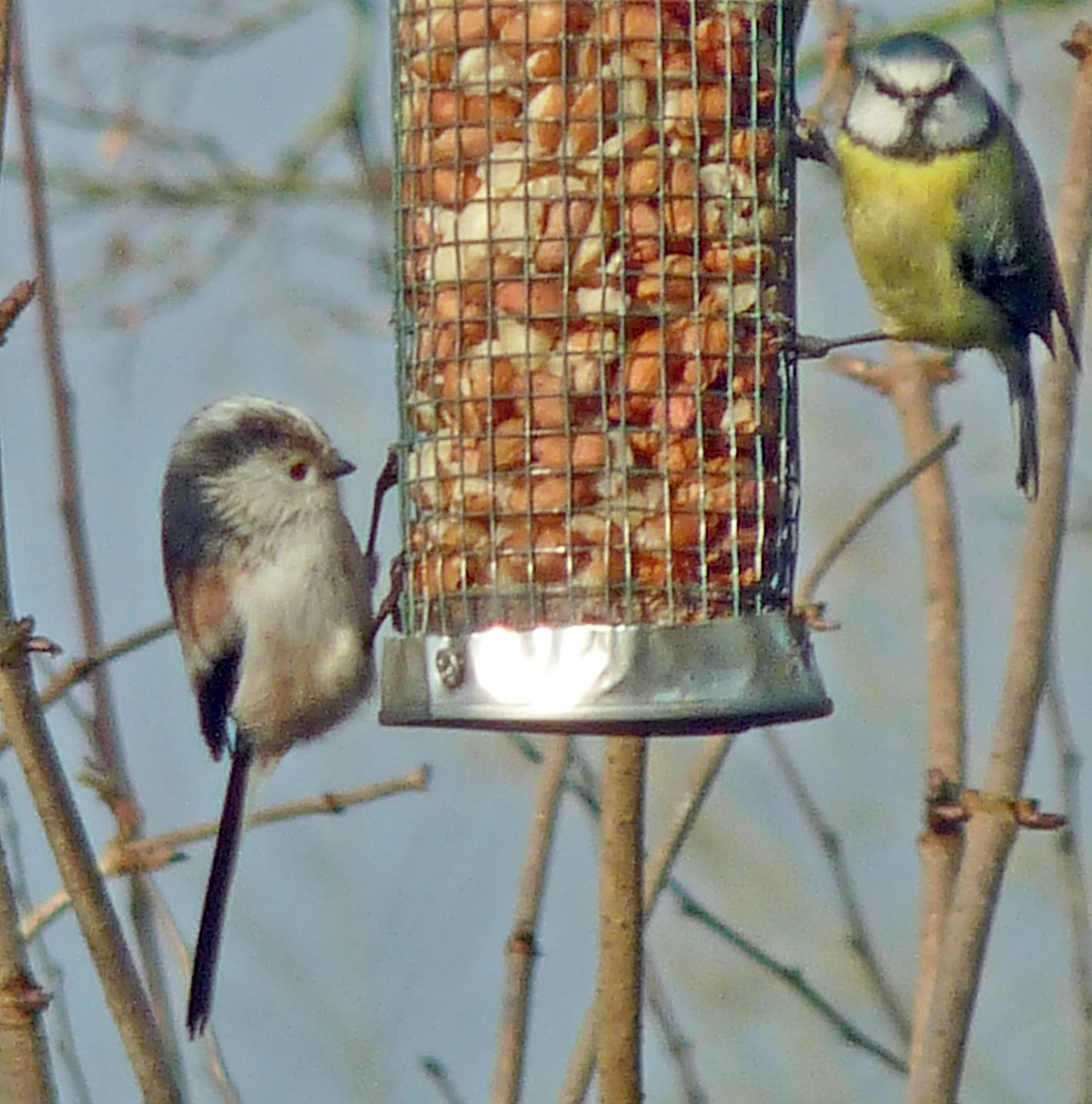
| a cute Blue Tit ... |
 |
| Share and share alike! |
 |
| Still room for a little one! |
 |
| I'm not sure about the identity of the bird on the right. Any ideas, please? |
 |
| ... until we could hardly see him! Such is the power of camouflage. |
Of all the birds listed, the Starling is the only one to have
RED conservation status. I know there has been a huge decline in this species, but, strangely, these are the birds we most often see at home in the Swansea area of Wales, UK. There was no sign on this occasion of the
Grey Squirrel or of the
Nuthatch. We saw a flock of geese in the vicinity: I must check my husband's photos for these. The fresh green growth of new Larch should be more in evidence on our next visit. I wonder what other changes we will observe then!
Previous TTY Posts
You can listen to a soundtrack of a Downy Woodpecker if you follow this link to TTY participant, Mike, at the
Slugyard.