Showing posts with label Eye-Catching Insects. Show all posts

Monday, 4 October 2021

Mystery Solved (I think): Kite-tailed Robberfly


Photo: 17 July 2021


I have been meaning to identify and post the photograph of this rather large and ferocious-looking creature for some months. We noticed it predating smaller insects in our 'no-mow' long grass. 

I have at last discovered (assuming I am right) that it is probably the Kite-tailed Robberfly, although there are 29 species of Robberfly in the UK. Unfortunately the end of the abdomen is hidden in the green stalks and therefore of little help in identification. 

Robberflies catch insects and spiders. They inject their prey to cause paralysis. The bristles on their face comprise their mystax (think: moustache), a new word for me.

This is an another first sighting (and the 120th insect) to add to my home patch list


Note: 

I am not sure whether 'Robberfly', 'Robber Fly' or 'Robber-fly' is the preferred spelling. The Wildlife Trusts seem to favour the first. The Encyclopdia Britannica site uses the second, and my Complete Guide to British Insects (Collins) adopts the third.


Sunday, 29 March 2020

Gorse Shieldbug


This little insect, nearly 1 cm in length, was walking about on the woodbine (if that is what this kind of unruly honeysuckle is called) on Friday. I suspected it was a Shieldbug of some variety since the Dockbugs in the garden tend to be brown. The green on the scutellum was a very vivid shade and I thought the gold rim (which I believe is the connexivum) was rather unusual.

I popped the photo on iSpot and it has been identified as a Gorse Shieldbug. My immediate reaction was 'but our garden doesn't have any gorse'. However, we have sandy soil and live in the vicinity of heathland; and gorse, it seems, is not the only host plant. I wonder what other insects I will see in the days ahead: I guess I may be in the garden rather a lot (though today was bitter with strong winds, hail and snow showers) as I cannot go beyond our boundary at present in my self-isolating regime.  

Friday, 22 March 2019

Ladybird, ladybird...


Just a quick post to add these 7-spot ladybirds to my blog. All three were photographed in our garden. We seem to have had quite a few this year, so I hope it bodes well. These sightings remind me that I must update my home patch list...


Friday, 16 March 2018

7-spot Ladybirds - a Seasonal First


I could feel the warmth of the sun coming through the glass earlier this afternoon, and went outside to find three Ladybirds in the back garden and two more by the front door. I was thinking this was fairly early for them to be scuttling about until I saw that my first sighting two years ago had been on 3 March 2016.


What a beautiful 7-spot! 

Once again, our region here in the 'far east' of the UK 
is expecting heavy snow over the next couple of days, 
so I am not sure when I will see the next Ladybirds on the move. 

Meanwhile, enjoy the weekend, whatever the weather...


Monday, 12 June 2017

Mullein Moth Larvae in the RSPB Garden, Flatford


There is usually something interesting to see in the RSPB Wildlife Garden at Flatford, and on this occasion it was this eye-catching larva of the Mullein Moth. What a magnificent caterpillar! 


Doesn't it blend in well with the Ox-eye daisies? 


You can see photos of the adult moth here. It is nocturnal and is rarely seen. 


The photo below shows Bridge Cottage on the River Stour in 'Constable Country'. The entrance to the RSPB Wildlife Garden is very close to the far side of the bridge.  


Wednesday, 31 May 2017

Ruby-tailed wasps on the wing


It is that short season once again when we have Ruby-tailed wasps in our garden. These magnificent insects take wing if disturbed but are lovely to watch on warm sunny days as they crawl around the wooden poles by the wild ?honeysuckle.

It is not the first time I have seen one on the old ladybird house in the photo above, but I do not know if they really use it or just crawl over it because it's there! They are very showy insects but their habits are not so refined for they get their food by the cleptoparalysis of potter wasps (Ancistrocerus).


We visited RSPB Minsmere the weekend before last when I took these photographs (above) in our garden. Imagine my excitement when I saw the iridescent wasp below scrabbling about in the reserve's sandy soil. This is obviously a different kind of wasp and I have yet to get an identification. 


The photo below shows the sand that has been removed very clearly.


Wednesday, 17 May 2017

More Butterflies at RSPB Flatford Wildlife Garden


Some days ago we paid a return visit to Flatford RSPB Wildlife Garden, hoping that there would be some butterflies about. A couple of male Orange Tips flitted past us almost immediately, followed by a magnificent male Brimstone. 


We always find the bank to the right of the photo (behind the picnic table) a good place for insects, and once again this proved to be the case. 

A female Orange Tip - these proved easier to photograph than their males counterparts.


Sadly we failed to see any Holly Blues. Blue butterflies are among my favourites...

A Peacock in the Ceanothus

A bee on the Alliums.

There were several Cardinal Beetles about, including this one on one of the log piles.


You can see the small white comma on the outer wing above, giving these butterflies their name.


Before heading home, we wandered down to the bridge at Flatford.


Just as we were leaving we noticed this well camouflaged but iridescent beetle (below). We certainly seem to be on the cusp of 'insect season': there were dancing Mayflies in the Flatford garden and we had a Cockchafer banging on our window at home last night. I saw my first 2017 damselfly in the garden yesterday afternoon. Speaking of firsts, it has been lovely to hear the cuckoo on two occasions, but I have yet to see my first bat...


Monday, 1 May 2017

RSPB Garden, Flatford - Insects Emerging


We paid a short visit to the RSPB Wildlife Garden in Flatford, home of the artist John Constable.


It was not particularly sunny, and there was a breeze about, but we managed to spot a few insects.


The photo above shows a corner of the dedicated Wildlife Garden, and the photo below shows the scene from the bridge above the Stour, including Bridge Cottage, in the care of the National Trust.


One of the volunteers in the garden helped us to see an Orange Tip egg, which you can just make out as a golden yellow dot on this stem of Jack-by-the-Hedge (aka Garlic Mustard).


You can see a close-up Orange tip butterfly egg here.


I saw one adult Orange tip, but failed to photograph it.


We noticed a couple of Peacocks in a sheltered spot.


I believe the creature above is some kind of parasitoid Wasp.


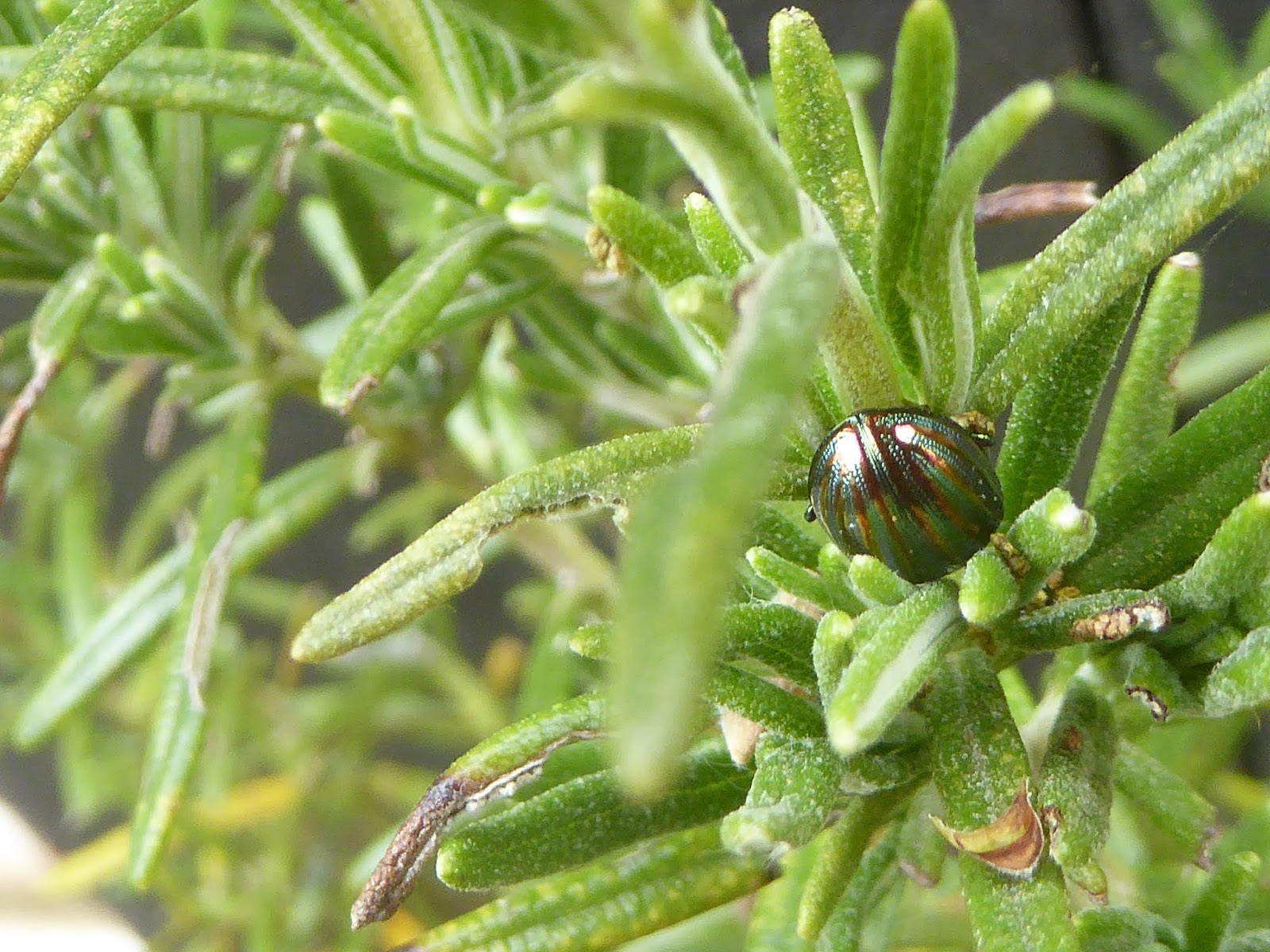
I was admiring the rosemary when I noticed this Rosemary Beetle. What a fine-looking insect, but what a pest (do check your lavender, rosemary and sage: you can report your own sightings here). We came home to find one of these beetles on our lavender bush...


There was a Queen wasp (something like Vespula germanica?) on the wooden planks.

Despite one or two less welcome visitors, it was a joy to see the emergence of a variety of insects.


Monday, 10 April 2017

A Trough for Wildflowers ~ Responding to a BBC Springwatch SOS


Those of you who read my previous post will know that we visited NT Ickworth some days ago to see the wonderful lambs. The photo above shows the striking rotunda, and if you click the next link, you will see a photo of another rotunda, this time on Belle Isle in the Lake District, which is associated with Fletcher Christian of Mutiny on the Bounty fame (or infamy). But I digress. 


This post is neither about lambs nor acts of derring-do on the high seas. The photo above shows the walled garden at Ickworth last August, when the wildflowers were abundant. Now you may feel that to grow wildflowers from packaged seed is a bit of a contradiction in terms; but, quite apart from the riot of colour, just think of all the pollen that will be attracting our insects. And we do have a nettle patch at home as well.

[UPDATE on 11 April 2017: at this point it seems a good idea to insert the helpful comment from fellow poet and blogger, Mavis Gulliver, as some of us may wish to follow her advice...  Mavis writes... 'We've been gardening for wild flowers on Islay for 21 years but rather than introduce non-native species and importing seed from the continent we gather local seed and have progressed from 1.2 acres of bracken,rocks and heather clumps to 204 species. Of course some have come of their own accord once our mowing regime encouraged them. Soon we will be leaving for a new challenge where I plan to follow the same principles. Gardening in this way doesn't produce such a colourful show as the packs of wild seed but we are helping to maintain the local flora.' Thank you, Mavis, so much for this important tip.]


I posted the tulip photo below in my previous post, but I am posting it again because it is current, and helps to show the extent of the area covered by poppies, cornflowers and all the other beauties in the photo above. 


The August 2016 photo below, shows blues, yellows, reds, whites and greens of this garden: what a spread for our pollen-gatherers...


... like this one...


Inspired not only by the riot of colour at Ickworth but also by the BBC Springwatch SOS exhortation to have a small wildflower planter within the garden, we bought ourselves a green trough and have planted three packets (quite large ones) of mixed wildflower seed. I have moved the primroses to another place now, and have filled the trough with soil pretty much up to the top. Small green shoots, reminding me of the first flush of mustard and cress from the days when we planted small seeds on blotting paper and squares of flannel, have already started to appear.


Needless to say, I can hardly wait for the first bud to open, and, if all goes according to plan, for the insects to come flying in.

The blackboard below was at Ickworth last summer, and while our own wildflower trough will be minuscule in comparison with the Ickworth garden, it should help to encourage wildlife into our homepatch.


Do drop a comment if you plan to plant a wildflower 'garden', too...
I plan to give intermittent updates on our green trough.

Friday, 24 March 2017

More insects... and the first daisies


These photos are a bit of a mixed bag, taken in our garden in bursts of sunshine. The wind has been a chilly one, but in sheltered spots, there have been signs of insect life. 


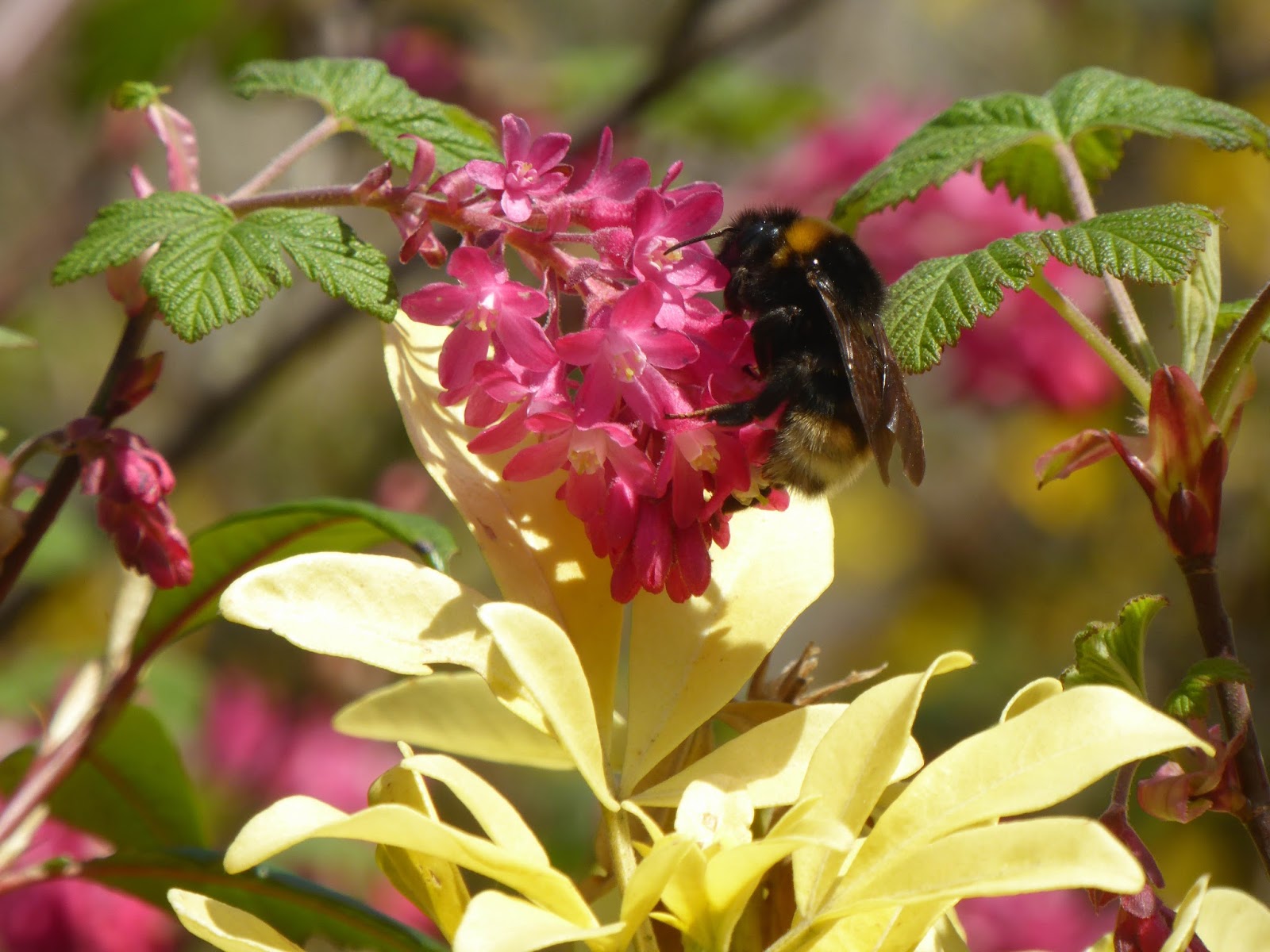
The flowering currant is always a favourite with bees.


The most colourful corner - Flowering Currant and Forsythia


I was delighted to find this little clump of Daisies. May there be many more as the days grow longer. N.B. For those of us in the UK, the clocks change this weekend. 


And a first Dandelion in the garden, emerging round a paving slab.