Showing posts with label Blake Morrison. Show all posts

Sunday, 2 February 2020

A Winter Afternoon at Shingle Street


Some of you may know Shingle Street or may know of it from Blake Morrison's poetry collection of the same name. For me it epitomises what is wild about the Suffolk coast. It can be bleak, and rumour has it that the bitter east winds blow in from Siberia. The ruggedness is what draws us back. We have watched seals here, though there were none in evidence this afternoon.


Visibility was cloudy but quite good on the shore, as you can tell from the photo above. The picture further up the coast was a bit different: in the photo below you can just make out the Orfordness Lighthouse through a rather otherworldly haze.


The sun kept coming and going during our time on the beach. The next photo shows the shoreline in the foreground, then the shingle spit, with Orfordness in the distance. You can make out the red and white bands of the decommissioned lighthouse more clearly in this shot.


There appeared to be very few birds about except for the gulls, two Redshanks in the tidal stream and the strings of Cormorants who flew past in a southerly direction.


The picture of the red and white bell-buoy below was taken with my zoom extended.


There were quite a few empty shells mixed in with the shingle...


... like this Oyster shell in the photo below, suggesting that the gulls had found some easy pickings.


It would be wonderful if there were seals hauled out on this sandbar next time...


The tide was on the low side, but was not particularly low.


This next picture shows a brackish pool, surrounded by a covering of green salt-resistant vegetation. There are many rare plants at Shingle Street.


To the right of the Whelk you can see some small green leaves beginning to reappear.


There were one or two toadstools in the mossy areas, and while I know they can favour damp conditions, I was surprised to find them tolerant of the salt.


I am not sure I have been able to identify the succulent-like plant (Sedum Acre, Biting Stonecrop?) in the photo below yet, but it was beginning to grow in all directions. There is a good vegetation list for the area here.


How's this for an empty beach!


By 3.45 pm the light was pretty low...

It was time to head home for a cup of tea.


Previous Shingle Street posts

Thursday, 3 January 2019

Shingle Street, a Wild Stretch of Suffolk Coast


I always enjoy a visit to Shingle Street, which can feel a very exposed part of the coast. Today we encountered surprisingly blue skies and calm sea conditions. There was very little wind despite the cool temperature. The rivers Ore and Alde (from which Aldeburgh gets its names) reach the sea here. There are currents and sandbanks. I always like to look out for this buoy, and on windy days you can hear its bell ringing. There was no sign of the green buoy this afternoon.


 We have often watched Common Seals, but there were none in evidence today.


There were, however, good numbers of Cormorant.


The light changes constantly and at times the view can seem quite surreal. 


Birds are continually on the move. 


I love the progression in the photo below from scrubby grass to watercourse to shingle to (sea which is hidden from view, then on to) sand, to sea and finally to a wide expanse of East Anglian sky. 


Shadows are very evocative in the low light at this time of year.


Nobody knows how much longer the Orford Ness lighthouse will withstand the battering of tides...


... but for now it stands as a poignant and cherished beacon, a monument to a former age.


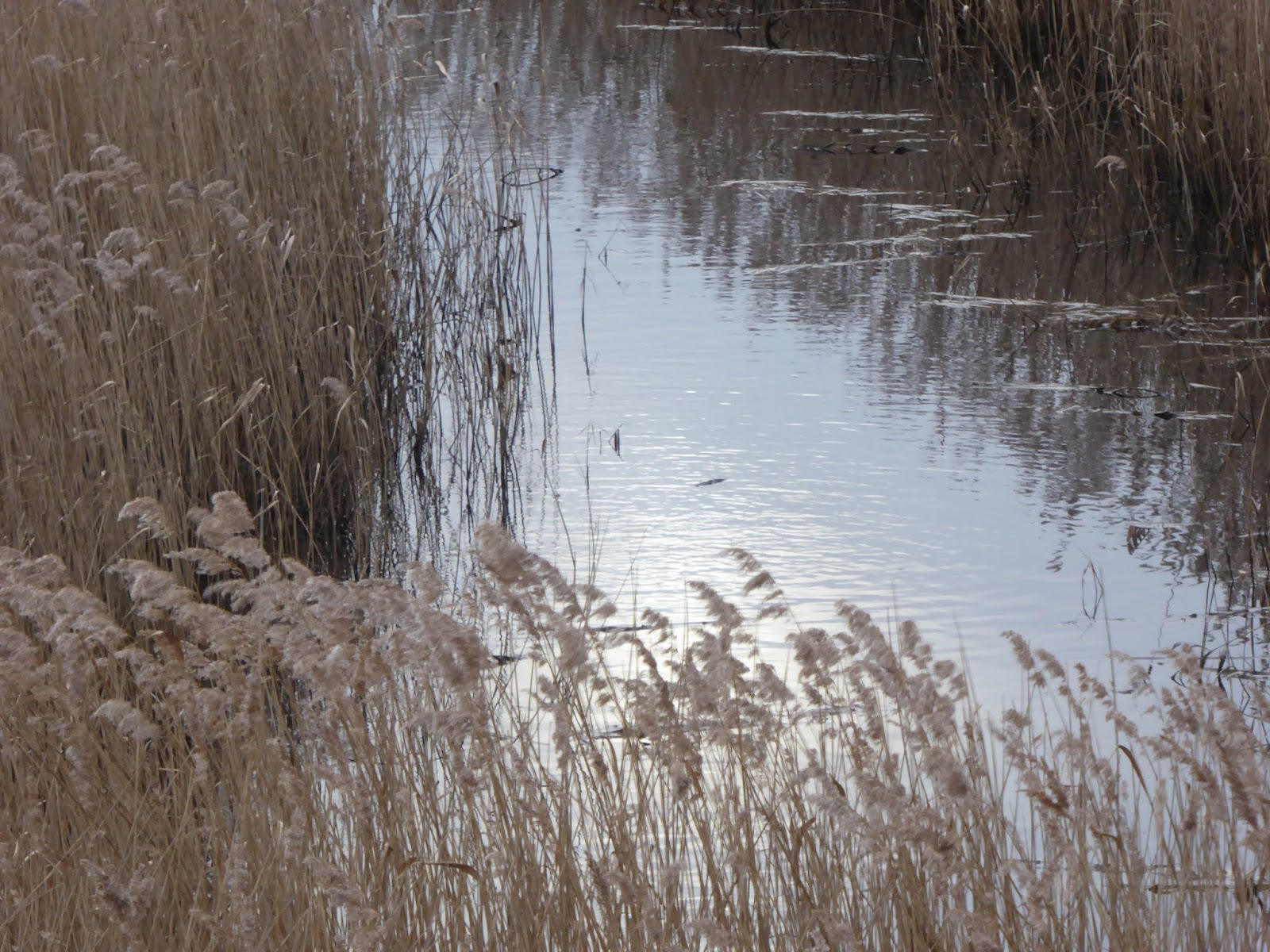
Reeds are an iconic part...


...of this desolate landscape.


They give way to a low-lying field of sheep and a church tower. 


Shingle Street is a terrific spot for wildlife. Pipits can often be seen, along with waders like the Redshank below. 


I suspect the lichen (if this is what it is) in the photo below bears testament to the pure air.


The shell below belonged to a Slipper Limpet. 


By 3 p.m. the light was fading fast...


 We took a last look at the buoy...


... and the gulp of Cormorants (there were many more in the sky by this time, probably heading for the marshes at Trimley). 


 The sparkle of sunlight on reeds was utterly irresistible!


We checked the mudflats in case there was anything unusual lurking in the shallows...


and David walked a bit further along the bank...


...before we turned for home with the call of the Redshank ringing in our ears.

Some of you may be acquainted with Blake Morrison's collection, Shingle Street (published by Chatto & Windus). Carol Rumens reviewed it here for The Guardian and Observer online.