Tuesday, 18 February 2020

Spring at Anglesey Abbey near Cambridge


We spent a couple of hours at Anglesey Abbey yesterday, immersing ourselves in the bursts of sunshine and the signs of spring. We saw two 7-spot Ladybirds emerging from their over-wintering state. These are the first ladybirds I have seen on the move since 2019. We also noticed quite a few bees, some of them bumblebees and some of them with orange pollen sacs. I am still waiting for my first butterfly...

What follow are some fairly random photos of the flowers and others sights we saw. Some of the plants and trees are undoubtedly cultivated and cared for; but an estate garden offers scope for a huge variety of wild species, too, due to the different habitats, in this case the silver birch stand, the snowdrop walk, the extensive grasslands where we sometimes encounter Green Woodpeckers, and the river where we watched a Kingfisher on our last visit. 


Blossom, bee and fresh leaves

The joy of spring colour

A scattering of species: Hellebore, Daffodil, Crocus and Snowdrop

My first 2020 ladybird sighting

Pollen and pollinator


My second 'emerging' Ladybird of 2020

Bumblebee with pollen sac

Contorted or Corkscrew Hazel (or Filbert?), with catkins

Cyclamen

Silver birch stand, looking stark, stately and somewhat otherwordly...

Who could resist these?

Small white Violets

A carpet of Snowdrops

A cultivated bulb

Aconite: these were almost over


There was a Periwinkle flower near the mill in the rusted inner band attached to a millwheel...

...and here is a close-up.

A time for reflections...

The mill lode

Looking back

Is this an early-flowering Cherry, perhaps?


Tranquillity


We saw several Robins; this one was looking here, there...

... and everywhere.

Anglesey Abbey


I always enjoy seeing a weathervane, particularly an unusual one like this gilded cast iron Viking longboat. I wonder what history lies behind it. If you like looking up to see weather vanes and windvanes, you might enjoy the chapter entitled 'Skylines' in Findings by Kathleen Jamie.

My thanks here to Ragged Robin for alerting me to the #LookUpForLent Twitter meme, which you will enjoy if you like gazing upwards at roof bosses, weather vanes and the like. 


Cyclamen: a sign of new life still to come

Saturday, 8 February 2020

Blue Skies at Snape, the Calm before the Storm


It is always a joy when the first spring flowers appear, and these bright yellow Aconites at Snape this afternoon were the first ones I have seen in 2020.


The reedbeds were shimmering in front of the poplars...


...and large swathes of the sandy soil had been ploughed.


This was the view, looking back to the Maltings, with its cafes, shops and famous concert hall.


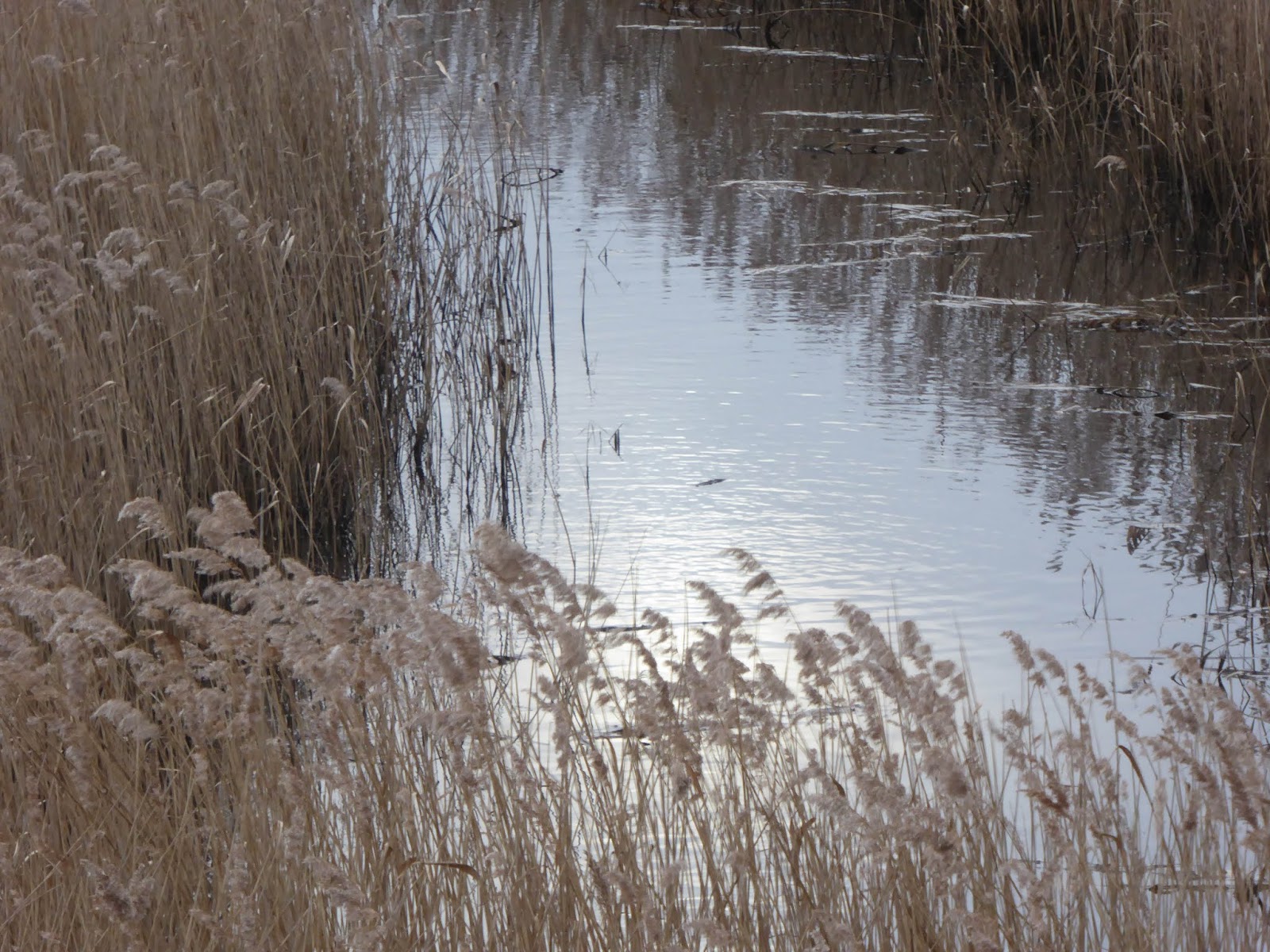
I saw one tiny fish in the water and a couple of flies or midges above it, but it was really the reed reflections that caught my eye.


The gulls were out in force.


There were a few small waders and some Shelduck in among them.


This is St Botolph's church, across the water at Iken.


These small flecks of green must indicate new growth in the reedbed.


I wonder who will find these remaining rosehips.


The land here is very flat, and I love the marked bands of colour - green, gold, blue, more green and more blue - that can be seen.


We stopped to listen for birds, but apart from the cooing sound of some distant Wood Pigeons, we heard very little above the sounds of an aeroplane overhead, some traffic in the distance and what was probably the motor of some kind of farm machinery.


There may not have been much sound on the marsh, but the view from the boardwalk is always rather special, with these stark trunks. Robert Macfarlane called these skeleton trees 'rampikes' on his Twitter feed on 24 September 2019. I always thought that trees like these had been struck by lightning, but I believe these ones may have been damaged by flooding.


On the east coast of the USA, stands of waterlogged trees are known as ghost forests. You can just see Iken church through the bare branches.


I'm guessing a Muntjac has been making its way through the reeds on a fairly regular basis.


There was a last shimmer of light as we took a last look at the poplars.


The moon rose over the water...


... as our shadows began to lengthen.

Postscript
Gusts in the high 60s (mph) are predicted for our area tomorrow (i.e. for Sunday 9 February). Do check the forecast if you are out and about.

Sunday, 2 February 2020

A Winter Afternoon at Shingle Street


Some of you may know Shingle Street or may know of it from Blake Morrison's poetry collection of the same name. For me it epitomises what is wild about the Suffolk coast. It can be bleak, and rumour has it that the bitter east winds blow in from Siberia. The ruggedness is what draws us back. We have watched seals here, though there were none in evidence this afternoon.


Visibility was cloudy but quite good on the shore, as you can tell from the photo above. The picture further up the coast was a bit different: in the photo below you can just make out the Orfordness Lighthouse through a rather otherworldly haze.


The sun kept coming and going during our time on the beach. The next photo shows the shoreline in the foreground, then the shingle spit, with Orfordness in the distance. You can make out the red and white bands of the decommissioned lighthouse more clearly in this shot.


There appeared to be very few birds about except for the gulls, two Redshanks in the tidal stream and the strings of Cormorants who flew past in a southerly direction.


The picture of the red and white bell-buoy below was taken with my zoom extended.


There were quite a few empty shells mixed in with the shingle...


... like this Oyster shell in the photo below, suggesting that the gulls had found some easy pickings.


It would be wonderful if there were seals hauled out on this sandbar next time...


The tide was on the low side, but was not particularly low.


This next picture shows a brackish pool, surrounded by a covering of green salt-resistant vegetation. There are many rare plants at Shingle Street.


To the right of the Whelk you can see some small green leaves beginning to reappear.


There were one or two toadstools in the mossy areas, and while I know they can favour damp conditions, I was surprised to find them tolerant of the salt.


I am not sure I have been able to identify the succulent-like plant (Sedum Acre, Biting Stonecrop?) in the photo below yet, but it was beginning to grow in all directions. There is a good vegetation list for the area here.


How's this for an empty beach!


By 3.45 pm the light was pretty low...


It was time to head home for a cup of tea.


Previous Shingle Street posts

Saturday, 1 February 2020

Spring Colour


Despite strong winds we have had patches of fine sunshine today in the garden. I hadn't been over to the far fence for some time and was delighted to stumble upon this show of 'naturalising' Cyclamen. We had a tiny pot of them some years ago, and now suddenly they have taken off! Is this due to our relatively frost-free winter, do you think? Apparently the Cyclamen we buy here in the UK have their origins in the wild, especially in places around the Mediterranean.


It's still over a month until St David's Day, but we couldn't resist these small Daffodils (or are they Narcissus?). We planted them in with the miniature Iris you see below, and I couldn't help noticing that the yellow and blue colours match those of a certain flag...


We visited a local nursery to buy our plants this afternoon, rather than the commercial garden centres, but I wonder when biodegradable pots will become the norm. I do hope it will be soon. Small plastic flowerpots (like the one with the daffs) are not much use to us once the plants have been planted out. The plastic container with the Iris was bought years ago before the plastic issue became so well known and so pressing. It has been reused many times and, since we have it, will doubtless continue to house new plants as needs arise. How do you keep plastic to a minimum in your gardening endeavours, I wonder?

While we were outside, we couldn't help noticing how unfazed the birds seemed by our presence. Robin, Starling, Long-tailed and Blue tits simply carried on eating the fat and seeds in the coconut feeders. I even saw a large Queen Bumblebee looping the loop. How long before my first butterfly sighting?