Showing posts with label Trees. Show all posts

Monday, 31 August 2020

Common Darters in Rendlesham Forest


Regular readers will know that I have a certain fascination for odonata. I have missed seeing so many species this summer as a result of our limited expeditions on account of the pandemic. It was a particular joy this afternoon, therefore, to see a few Common Darter dragonflies at the edge of Rendlesham Forest. You can see the female above and the male of the species below. 


It was a pretty nondescript Bank Holiday weatherwise here in Suffolk, with occasional patches of sunshine, large swathes of grey cloud and even a shower of rain. The photo below shows where the gravel path from the road gives way to a grassy track over sandy soil. The dragonflies favoured the stony ground as you can see in the photo above (it almost looks like shingle on a beach). At times they were extremely camouflaged.


Rendlesham Forest, owned and managed by the Forestry Commission, is 1500 hectares in size. There are various trails and tracks that can be followed. Despite keeping a sharp eye on the path, I nearly stepped on the insect below. I moved back quickly, and we noticed it seemed to be digging. I wish my camera did justice to this kind of scene, but my better one is too heavy to carry!


Is it a digger wasp of some sort? It looked a bit like a hornet, but seemed rather small. I considered Bee Wolf since we see these occasionally nearer the coast, but the markings do not seem right. It looks in appearance, if not in behaviour, rather like a Common Wasp to me. I will try iSpot next...


Does it look to you as though digging is in progress?


I was pleased to find this bee near the entrance to the forest...


... where there were quite large patches of Common Toadflax.


We noticed an Oak tree on the edge of the pines. There must have been a Grey Squirrel in the branches above as bits of acorn kept landing near our feet.


There were other telltale squirrel signs as well...


I noticed a small Pine Ladybird in the garden this morning, the first ladybird I had seen for weeks, so it was good to find a couple of 7-spots in the forest.


I'm guessing the flower below is Red Campion, though I don't remember the receptacle being so bulbous.


David and I both remarked on the fact that a cultivated forest can seem a little 'sterile', but the addition of Oaks, Sycamore and Silver Birch meant that there were patches of undergrowth. These other species were clearly enhancing the biodiversity.

It was good to hear the caw-cawing of corvids overhead and we think we heard a mouse, shrew or vole in the bracken. The photo above shows how the different plants mingled in and out of one another along the verges of the grassy path.

Sunday, 23 February 2020

Female Hooded Merganser in Christchurch Park, Ipswich


Earlier in the week I had read a post on Facebook (David Quinton, Suffolk Birds, 21 February 2020) with photos of a female Hooded Merganser in Christchurch Park. We decided to take a look to see if the bird was still in the area. As you can see, she was, though the sunlight was intermittent and my photos are little more than record shots. I have read on the internet that the bird was introduced by the park authorities in the hope that this female would mate with a male, but I have not verified this suggestion.

What I do know is that a certain male Hooded Merganser recently went for a waddle down Tavern Street in the town centre, and had to be returned to the Christchurch pond by park rangers. According to the report in The Ipswich Star, the bird is almost certainly not a wild one.

Hooded Mergansers hail from North America, and the female in the photo is the first I have knowingly seen. Having watched a good number of Goosanders and Red-breasted Mergansers in the north of Britain, I was surprised at the small size of the bird in the park.


You can see her ginger 'tuft' in the photo below as she leaves the geese to their rest and heads out alone onto the water.


David thought he saw a Song Thrush in the garden a couple of days ago. I missed it, but was pleased to see this thrush in the park hopping about in the twigs.


The photo below shows one of the Coots we noticed.


There was a large queen Bumblebee on the pussy willow below, but by the time I had focused my camera, she had flown off. Just look at the pollen she left behind.


We noticed a few Manadrin ducks. There are usually some in or around the pond.


Christchurch Park is really very convenient for Ipswich. The church below, St Margaret's, in the town centre can be seen from the park. 


Flowers and blossom are beginning to grace us with their presence. I believe this flower, with its distinctive speckled leaves, is Lungwort or Pulmonaria.


The yew in the photo below is the oldest tree in the park, and has its own sign which explains that yews are among the hardest 'soft wood' trees. The tree is over 14m high and at least 600 years old.


What fascinating bark and trunk structures...


There were several Grey Squirrels darting about and skimming up and down trees. The ground was littered with what looked distinctly like half nibbled chestnuts.


Thomas Wolsey was an Ipswich man...


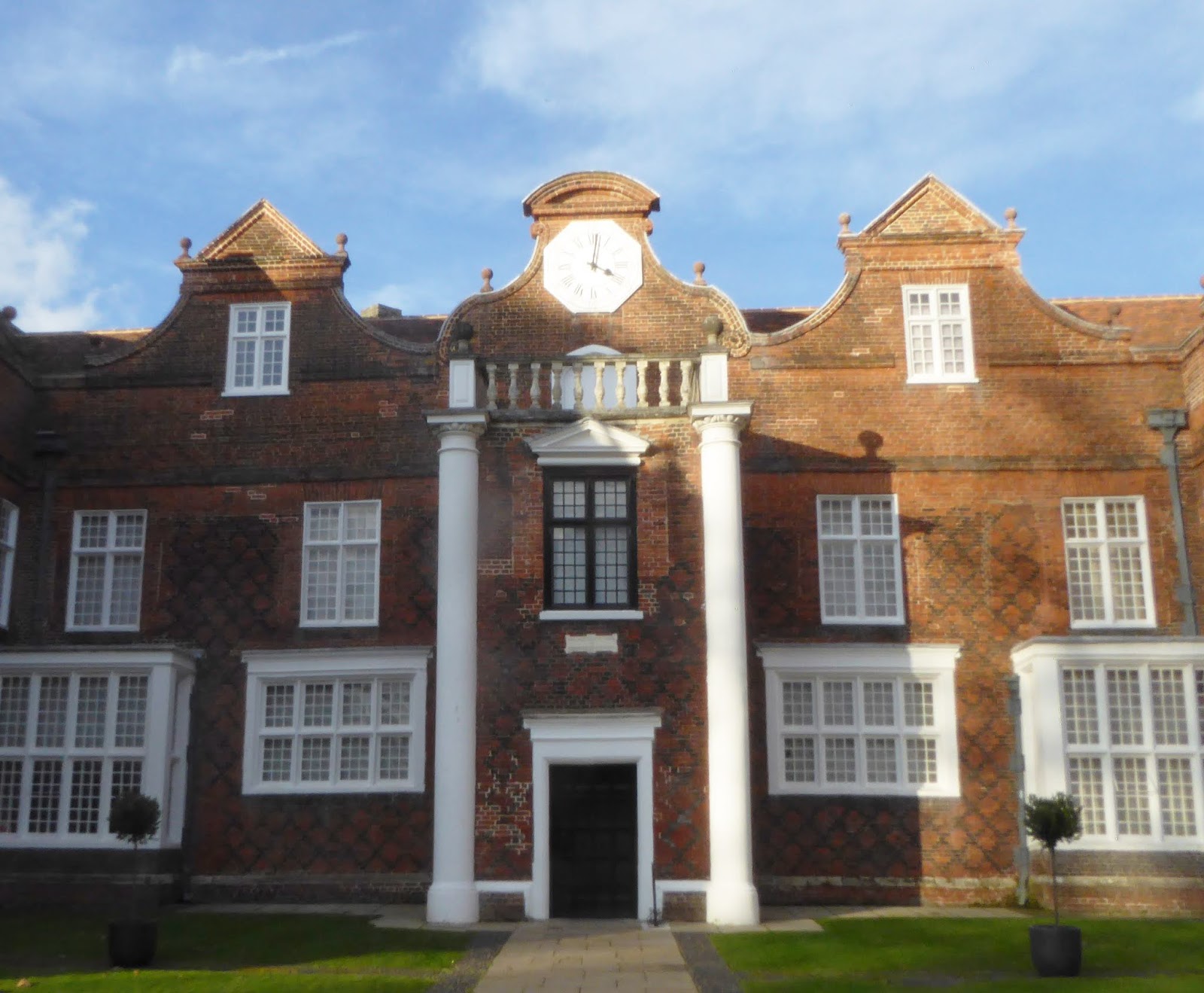
The picture below shows part of the facade of Christchurch Mansion, which is situated in the park. It was constructed on the 12th century site of Holy Trinity Priory, which failed to survive the Dissolution of the Monasteries under King Henry VIII.


This plaque with the date 1550 rather appealed to me.


My Latin is pretty rusty but if you think along the lines of making the most of your talents, you probably won't go far wrong...


It was good to have made the most of the sunshine...


...and to have enjoyed birdsong from the bushes. The Robin below was looking magnificent.


* * *


The light was fading by the time we reached home, but I was thrilled to find that our single Snowdrop had become a tiny drift...


...and with a very early tulip braving the wind and a hungry Blue tit feeding from the coconut, it began to feel just a little like spring.


Tuesday, 19 April 2016

More images from RSPB Minsmere


The Water Vole on my previous post may have been the highlight of our visit to Minsmere this last weekend, but there were many other lovely things on offer. Spring is burgeoning and the willows and birches are bursting forth. 


We were really hoping to see Bearded tits, but it was the afternoon and like a number of other birds, they were deep in the reedbeds. Every so often we heard the distinctive 'ping', but they eluded us. We were told we should get there much earlier in the day.

Bearded tit - from last year. Such fabulous birds ...

There was quite a gathering in the woods on the way to Island Mere and we were told that the excitement had been caused by a female Blackcap, not that you can tell very easily from my photo!


We nearly always hear the Green Woodpecker's yaffle. This time we only saw one, and it was a fair distance away, almost beyond the reach of my zoom, so apologies for the blurry image below. 


This handsome Snipe had perched in the reeds a short distance from the Island Mere hide.


We were able to get a good view through the open windows.


I could award these two in the photo below the 'noisy' prize, but perhaps that should go to the Little Grebe!


A couple of Marsh Harriers were flying high over us in the thermals.


The photo below shows the view from the BBC Springwatch cabin, looking down towards Island Mere. The sea is off to the left, beyond the confines of this photo, where - unfortunately - the view is rudely interrupted by the white dome of Sizewell Power Station.


The path back to the entrance to the reserve was very muddy. How about this for a sign ...


We called in at Snape Maltings on our way home, unable to resist a quick photo of the rainbow over the reedbeds ...


Tuesday, 5 January 2016

Beech Branch Mystery at NT Ickworth

Pheasant at NT Ickworth, Suffolk, 4 January 2016

Happy New Year! 


We were wandering through the delightful grounds at NT Ickworth, looking for early signs of spring, when our eyes alighted on this strange object on a beech twig. You can see the beech buds at the end of the branches, but what is the strange white bundle?

While I am intrigued by a mystery, I am also curious enough to enjoy the satisfaction of finding the answer, often with a little help from my friends! So please drop a line in the comments or on my @coastcard twitter account if you can help.

It may be just a decaying leaf, but we suspect it may be an overwintering pupa or cocoon of some sort.

I note incidentally that there are lepidoptera like the barred Hook-tip moth (Watsonalla contraria) which sandwich their pupa between two beech leaves.  

NT Ickworth
I am reminded that the term marcescence refers to leaves (like many beech leaves) that dry up but do not fall off in the autumn. 

May 2016 bring many more wildlife mysteries and wonders to our attention!