Showing posts with label Dragonflies. Show all posts

Friday, 9 August 2024

Toad and Friends: This Week in Our Wild Garden


We looked out the window yesterday morning at about 10.30 ... and were greeted with the sight of this rather magnificent toad. This is the second time we have seen the toad on our patio this summer. 


I have decided to post the extremely poor record shot above as much as a note to myself as anything. 

The point is that I saw the Migrant hawker in the lower half of this image, and took a quick photo, little realising that there was actually a second dragonfly above (see black arrow). Result: the top dragonfly has been cut in two unnecessarily. It was only a record shot (a quick first image in case the creature flew away), and as such the quality doesn't worry me too much; but what concerns me is the fact that even after this photograph had been taken, I still failed to notice the second insect. I have been thinking about William Blake and his famous, albeit metaphorical, line about seeing a universe in a sand particle; well, it seems I need to sharpen up my powers of observation and concentration considerably.

Below: this is a better image of the top dragon (which in mind at the time was the lower and only one, so presumably by this time the lower one had flown), showing off the distinctive yellow golf-tee marking on S2, just below the wings:


The photo below shows one of our two Wasp spiders. You can see a white food parcel near the top and what will become a second once the spider has completed her task. I'm wondering if she has wrapped up a small bee.


And finally for now, my first garden sighting of a tiny 22-spot ladybird. The sun was in completely the wrong place and the insect was only about 3mm in length, but at least I was able to identify it from the poor-quality photo. 

There have not been many butterflies about this week in the garden; perhaps it has been too windy. Even so, we have logged Peacock, Red Admiral, Large and Small White, Gatekeeper, Meadow Brown, Comma and Holly Blue. I wonder what the weekend will bring. I am still hoping to see my first Painted Lady of the season.

 

Saturday, 28 May 2022

Damsels, Dragons and Painted Ladies at Helmingham Hall


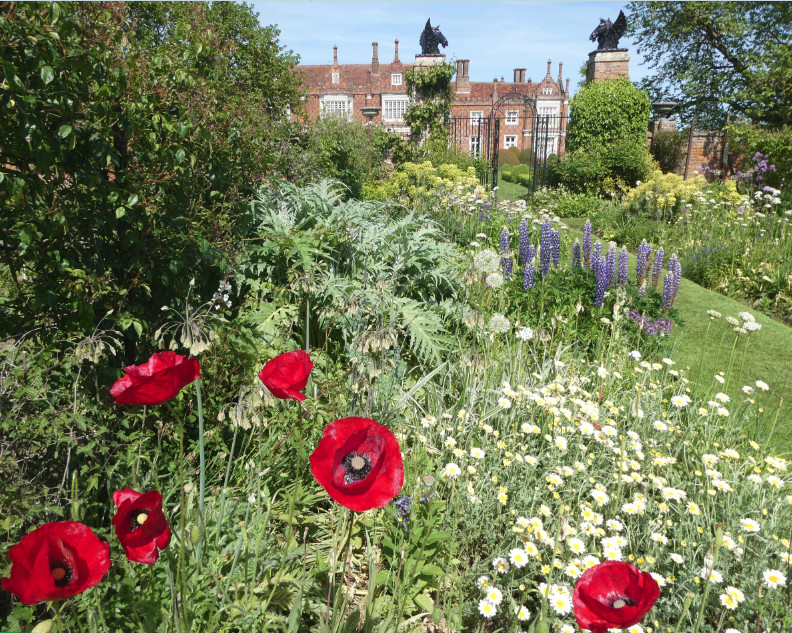
We visited the gardens at Helmingham Hall last weekend in the hope that we might be some early 'dragons' or 'damsels' around the moat. As you can see, the walled garden was looking very beautiful. 


We were thrilled to see our first Painted Ladies of the season, and since then we have had one in the garden at home. 


And yes! There were damselflies, many of them Large Reds like the one in the photo. 


We saw a couple of these Broad-bodied Chasers. The males are blue, but females and immature ones are a shimmering gold. 

Monday, 18 October 2021

Sutton Hoo, X Marks the Trees


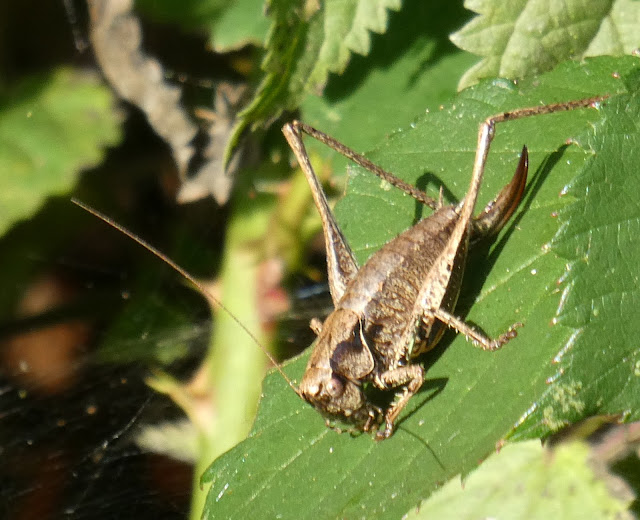
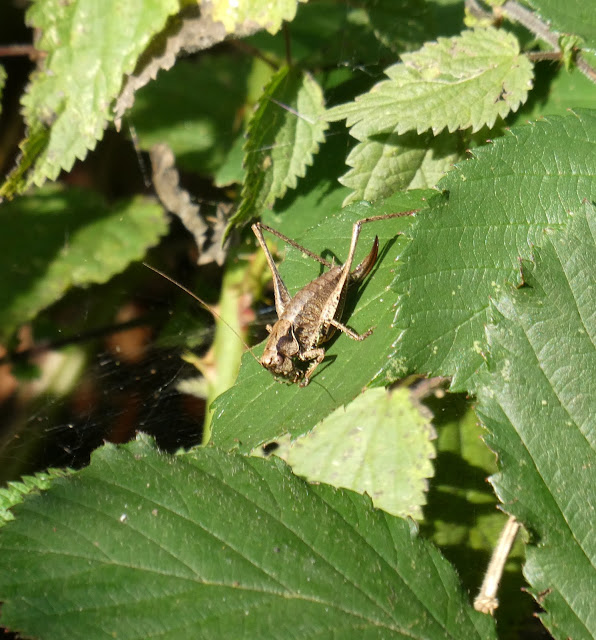
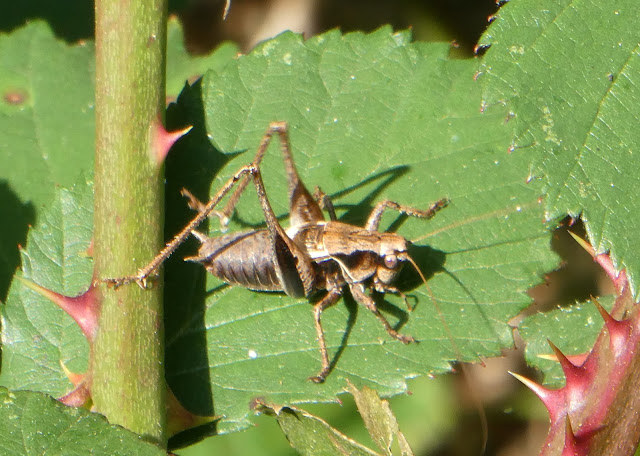
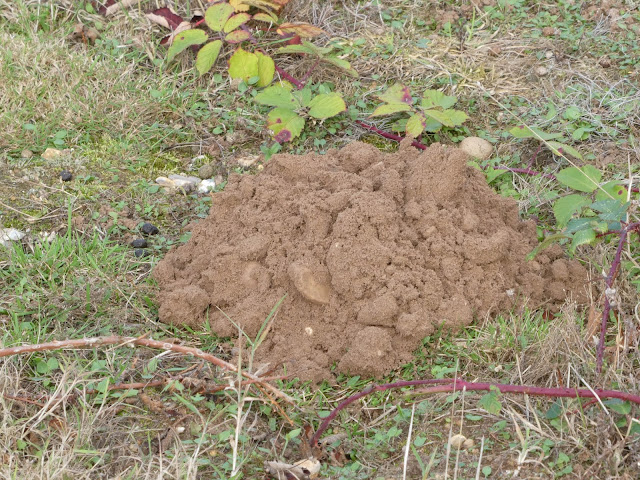
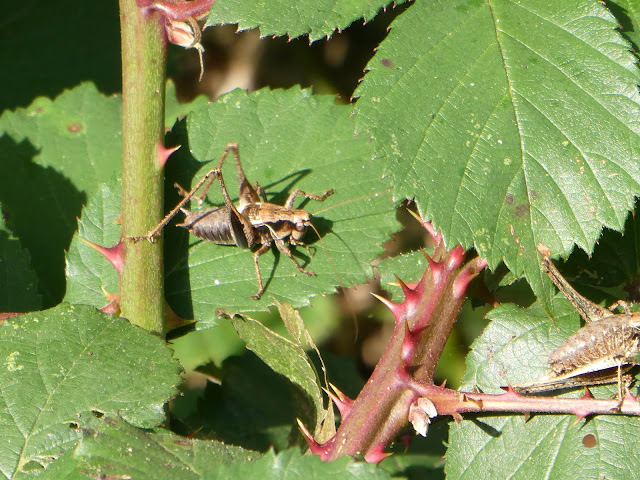
We spent a couple of hours at NT Sutton Hoo last weekend, once again leaving the other visitors to the mounds while we sought out the more secluded corners of the site. We hoped (in vain as it turned out) to see one or two more butterflies in the brief spells of afternoon sunshine. Sadly we failed to spot any, but were rewarded with sightings of Orthoptera (two Dark Bush-Crickets) and Odonata (a Common Darter and ?a Ruddy Darter). We also noticed a few molehills in the sandy soil. 

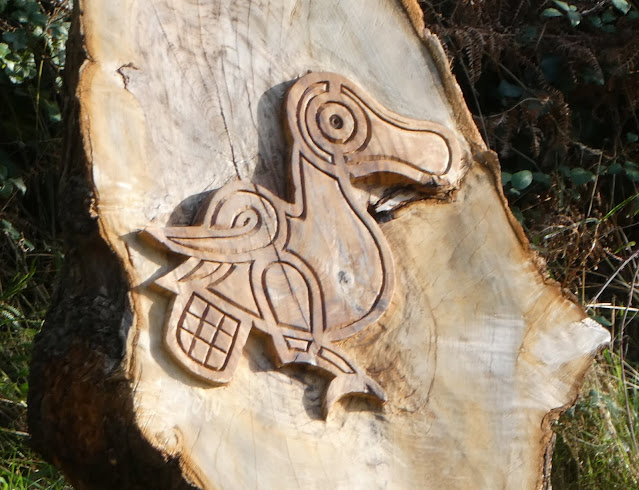
My previous Sutton Hoo post included a modern wood carving replicating one of the wild boar designs. The photo above shows an image that puzzled me until this evening when we succeeded in tracking it down. The bird looks a bit like a Dodo to me, but I knew that couldn't be right. The original has sometimes, though not exclusively, been classified as a duck by Anglo-Saxon scholars; it adorns the exquisite Sutton Hoo purse-lid.

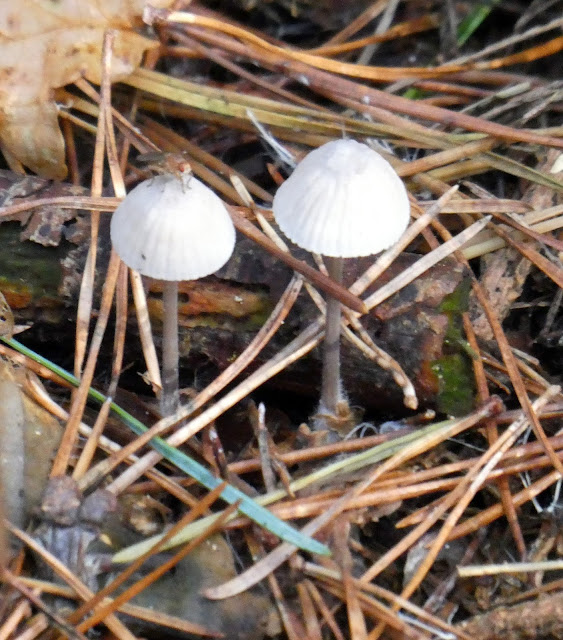
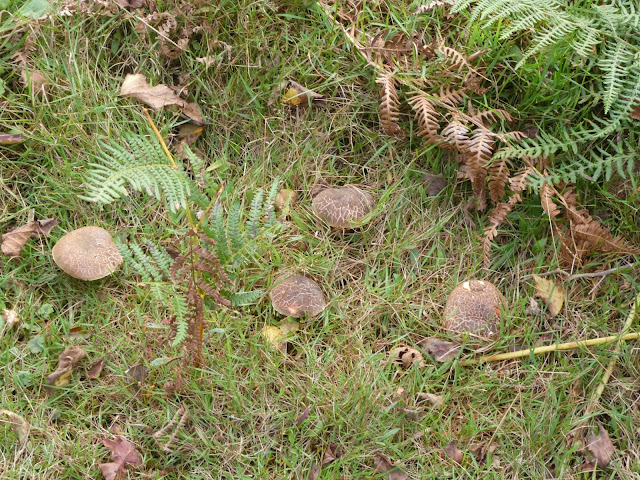
Autumn was much in evidence, and we noted several species of fungi. It was a joy to watch two Dark Bush-Crickets foraging in the nettles and areas of mixed hedging. I had forgotten how large these insects are, large that is until you compare them with the 6cm+ Great Green Bush-Crickets we loved to see in Cornwall back in the 1970s and 1980s.


I wonder if you know this species? If so, do please leave a comment.

Dark Bush-Cricket


Common Darter

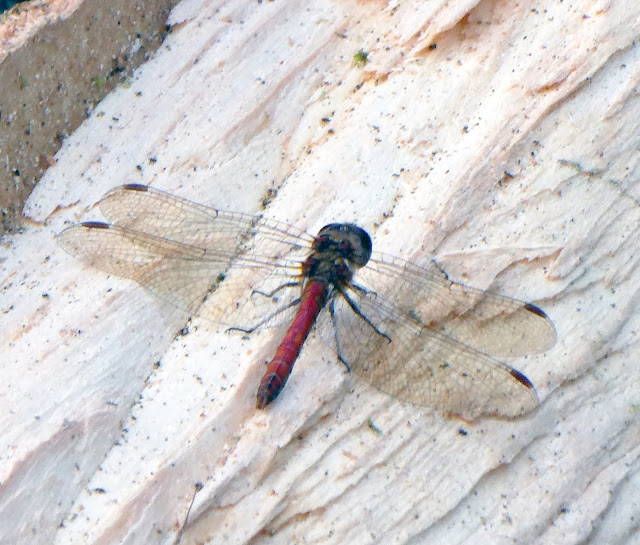
Over to you: Common or Ruddy Darter?

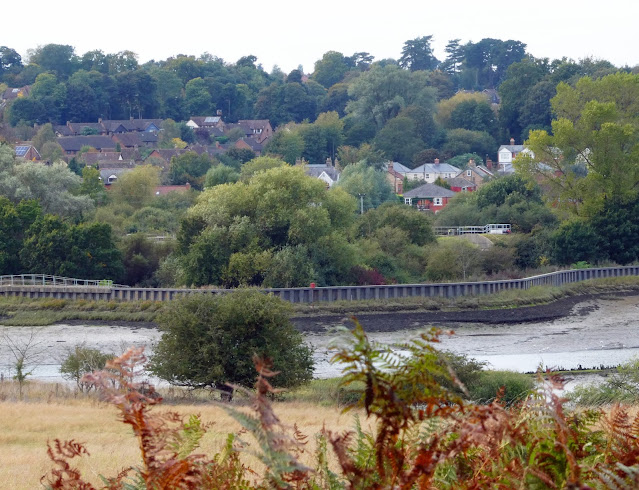
View across the river Deben to Woodbridge

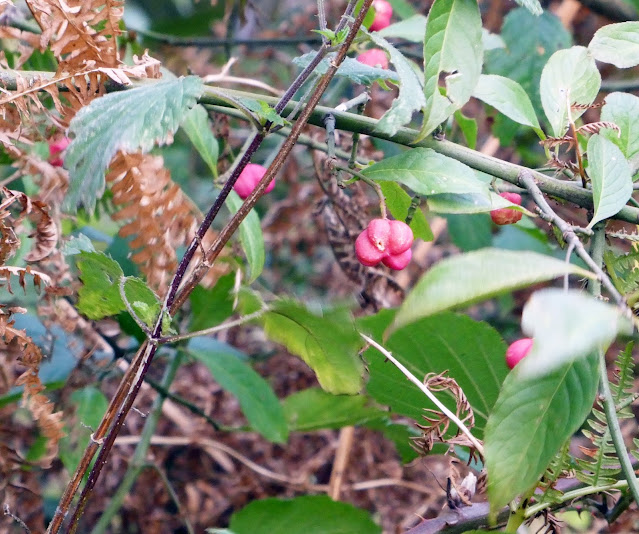
Spindle berries, which trigger nursery school memories - of this

I was so taken by the shiny chestnuts that I nearly missed the insect ...

A land of many molehills

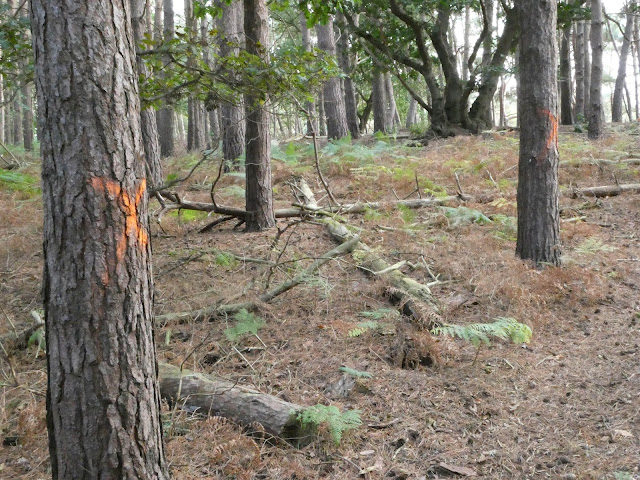
X marks the spot ... Are more trees to be felled?

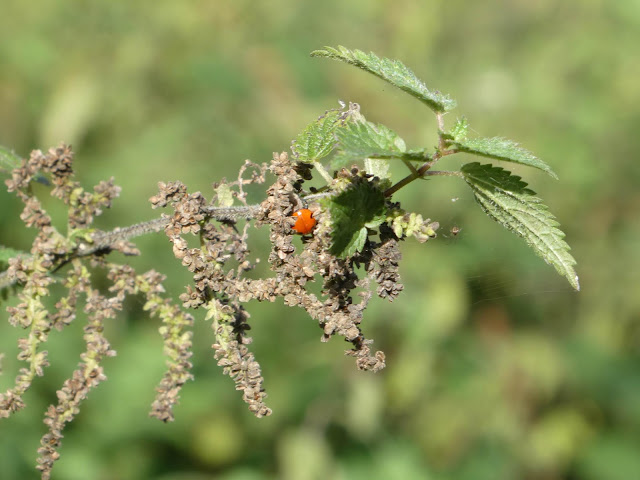
A ladybird at last

One and a half Dark Bush-Crickets

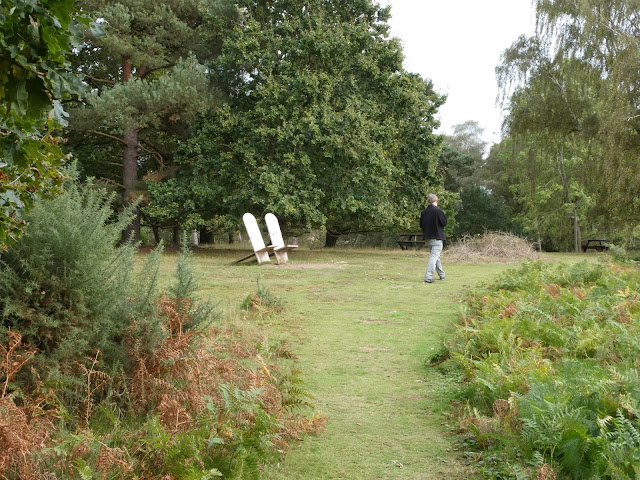
A favourite spot, river Deben down to the right

More toadstools

P.S. Who noticed the Sutton Hoo question on University Challenge (BBC) this evening?

Tuesday, 28 September 2021

Back on Dunwich Heath at last


We took a picnic to NT Dunwich Heath last weekend, hoping that perhaps there would be a few breaks in the cloud. 


You can see our picnic spot in the photo above. The white building is made up of old coastguard cottages. I took this picture with my back to the sea.


I love the archway above and have never noticed it before. The weather was overcast initially, but by about 2pm, the sun had broken through and we were able to watch a few damsels and dragons in the sheltered corners. 


As we peered into the water beneath the decking, our eyes alighted on two Great Diving Beetles. I was reminded of the giant water-beetle in The Tale of Mr. Jeremy Fisher by Beatrix Potter. 


David had his measuring card on him, so we were able to see if the beetles were three centimetres in length, the size of a Great Diving Beetle. We reckoned they were pretty well spot on, despite the fact that the remaining beetle's head had dipped down by this time. 


There were good numbers of Ruddy Darters; most, but not all (see below), were on the wing. The one in the photograph had rather ragged wings.


The dragons in the next photo were certainly making their presence felt!


We saw two Migrant Hawkers during the course of the afternoon (see above, first photo in this post), both hanging from their respective branches of twigs. They both had a blue aura about them, possibly a trick of the low light, but I think they are Migrant Hawkers as both displayed the characteristic yellow golf-tee mark.


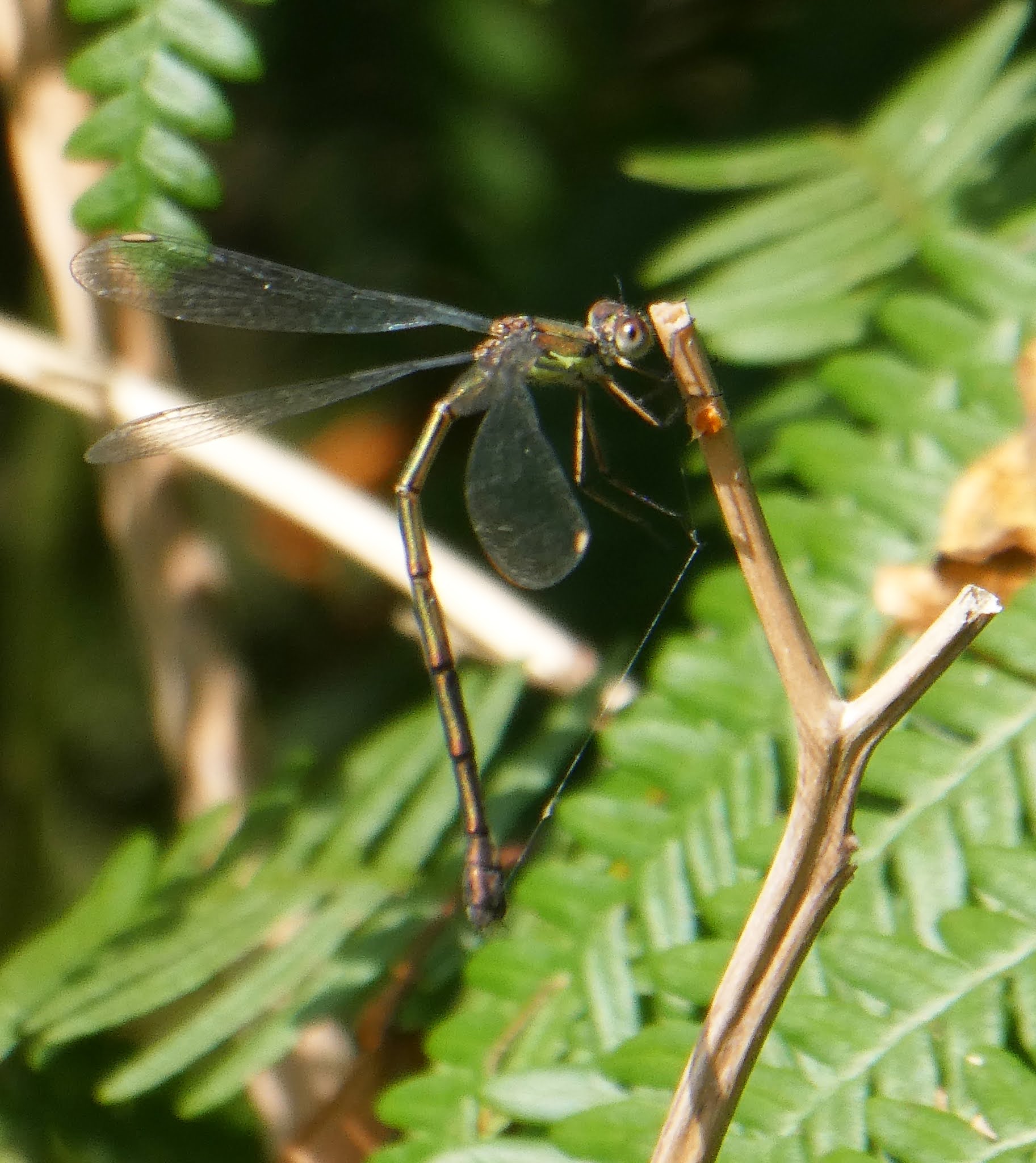
I have seen very few damsels this year, so was delighted to find the Emerald Damselfly (update, 29 Sept. 2021: please see comments where Conehead54 has informed me that this is actually a Willow Emerald) in the photo below).


The damselfly in the next two photos was a very obliging subject.


We found the sandy bank home of some Red-banded Sand Wasps. You can just about make out the pockmarks in the exposed part of the ridge. The photos below show one of the wasps entering the nest.


I had not expected the heather to be turning brown so soon, but there were still some small patches where most the flowers were still in bloom. I have always enjoyed seeing heathland, whether in Suffolk or Cornwall, alight with the pink of the heather and the golden glow of gorse.


We were soon back at our starting point by the coastguard cottages, staring out at the ocean. As you can see, there was no need for any social distancing down below on the shore!


Since last Saturday when these photographs were taken, the weather has turned much more autumnal, which is perhaps not surprising since we are now several days past the Autumn Equinox. I can hear lashing rain outside my window as I type, and I suspect it may be many months before we see scenes like the one below again. 


Dunwich Heath is a favourite haunt. It features in my poem, 'Dunwich in Winter', which can be found on p.14 of my recent poetry collection, Driftwood by Starlight (The Seventh Quarry Press, June 2021) - see here

This poem has also been reproduced on the Suffolk Poetry Society 70th Anniversary calendar for 2022.  


Monday, 31 August 2020

Common Darters in Rendlesham Forest


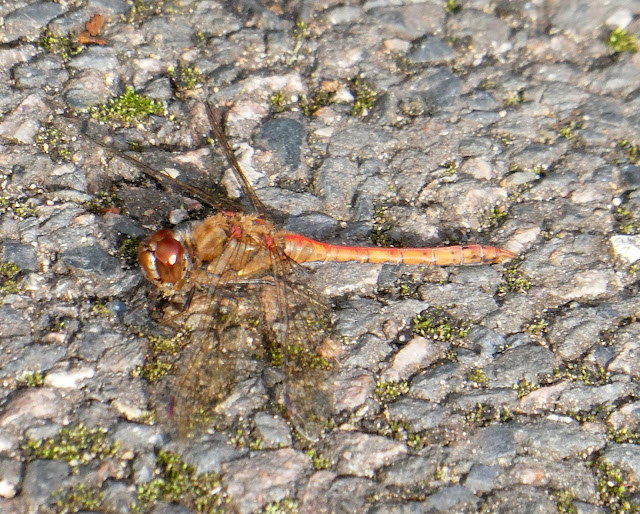
Regular readers will know that I have a certain fascination for odonata. I have missed seeing so many species this summer as a result of our limited expeditions on account of the pandemic. It was a particular joy this afternoon, therefore, to see a few Common Darter dragonflies at the edge of Rendlesham Forest. You can see the female above and the male of the species below. 


It was a pretty nondescript Bank Holiday weatherwise here in Suffolk, with occasional patches of sunshine, large swathes of grey cloud and even a shower of rain. The photo below shows where the gravel path from the road gives way to a grassy track over sandy soil. The dragonflies favoured the stony ground as you can see in the photo above (it almost looks like shingle on a beach). At times they were extremely camouflaged.


Rendlesham Forest, owned and managed by the Forestry Commission, is 1500 hectares in size. There are various trails and tracks that can be followed. Despite keeping a sharp eye on the path, I nearly stepped on the insect below. I moved back quickly, and we noticed it seemed to be digging. I wish my camera did justice to this kind of scene, but my better one is too heavy to carry!


Is it a digger wasp of some sort? It looked a bit like a hornet, but seemed rather small. I considered Bee Wolf since we see these occasionally nearer the coast, but the markings do not seem right. It looks in appearance, if not in behaviour, rather like a Common Wasp to me. I will try iSpot next...


Does it look to you as though digging is in progress?


I was pleased to find this bee near the entrance to the forest...


... where there were quite large patches of Common Toadflax.


We noticed an Oak tree on the edge of the pines. There must have been a Grey Squirrel in the branches above as bits of acorn kept landing near our feet.


There were other telltale squirrel signs as well...


I noticed a small Pine Ladybird in the garden this morning, the first ladybird I had seen for weeks, so it was good to find a couple of 7-spots in the forest.


I'm guessing the flower below is Red Campion, though I don't remember the receptacle being so bulbous.


David and I both remarked on the fact that a cultivated forest can seem a little 'sterile', but the addition of Oaks, Sycamore and Silver Birch meant that there were patches of undergrowth. These other species were clearly enhancing the biodiversity.

It was good to hear the caw-cawing of corvids overhead and we think we heard a mouse, shrew or vole in the bracken. The photo above shows how the different plants mingled in and out of one another along the verges of the grassy path.