Showing posts with label BBC Springwatch. Show all posts

Saturday, 10 February 2018

Urban Birds (and Mammals) in a Local Park

Treecreeper

Inspired by the launch of Nadia Kingsley's new book of art and poetry, DIVERSIFLY, on the theme of urban birds in Britain, we took a short spin around a local park to see what was about before the rain got too heavy.

Having seen the Kingfishers (here and here) on BBC Winterwatch recently, we were thrilled to find not one but two by the lake, presumably a male and a female. Will there be young in due course?

Sadly the birds were at the furthest point from us for much of the time, and since my zoom does not perform well in grey rainy weather, my photo is just a record shot - but it is always a thrill to see these birds, and I have never seen two at the same time before.

Catkins - I think these are birch ones... (whoops, Juliet thins they are hazel. My mistake. Thank you, Juliet!)

Coot

Young adult Black-headed Gull

The ice house from the days when the park was part of an estate


We were fascinated to see the small trunks growing vertically out of the horizontal trunk. This was where we saw our first rat. David also noticed a Grey Squirrel.


It's always lovely to see a Robin.


I had hoped there might have been more Snowdrops, but it was good to see the few that there were.
Good weather for ducks... This is largely, but not entirely, Mallard!
Look who's peeping out!

I don't know if our presence startled the rats, but the larger one, presumably the mother, swam off across the lake. The young one (peeping out of the trunk, two photos up) came down and sniffed around the tree trunk.

We also noticed Wood Pigeons, a Carrion Crow, a Bluetit and a Magpie. Not bad for a short visit in the rain...


Wednesday, 1 November 2017

Words, Key Components of Nature Writing

Conker, one of the #naturewords

You may have heard on BBC Autumnwatch that the AHRC has just launched a new initiative, Land Lines (see this post, too), to find the nation's favourite book about nature. Nominations of #favnaturebook choices can be submitted up until the end of November. I have so many favourites including classic and contemporary works, poetry and prose, fiction and non-fiction... and am finding it hard to shorten my list to a single title. 

Much has been happening recently in the arena of nature words. It will not have escaped the notice of many that Robert Macfarlane's new book, The Lost Words, with exquisite illustrations by Jackie Morris, has just been published

Chrissie Gittins, author of Adder, Bluebell, Lobster, a collection of 'wild poems' for children based on forty of the 'lost words', appeared on BBC Countryfile recently, exploring nature words with the current generation of youngsters.

Laurence Rose, a journalist who curates the Natural Light site, has posted a range of excellent material over several years. Do take a look at his pages.

I do not know what sparked the Land Lines initiative, but I do know that poets, journalists, naturalists and nature writers have been moved to express their views in one way or another in the wake of the nature word discussions. These began following the removal, some years ago now, by OUP of words such as 'conker' and 'acorn' from their Junior Dictionary, a reference book suitable for seven years old, in order to accommodate words that were considered more contemporary such as 'broadband' and 'analogue'.

I first became aware of this situation at the 2015 Norfolk Festival of Nature. I attended a session led by Mark Cocker and Margaret Atwood: I blogged about the event here. Sadly some of my links have now expired. Mark Cocker displayed his photographic images of many of the species that had been omitted. 

Writers were already at work, and in the days that followed the festival, the news began to spread across the internet, and responses began to emerge, including A Lament for Lost Words by Malcolm Guite.    

 The nature words are not as outdated as you might suppose. They include the following:

acorn, adder, ash, beech, bloom, bluebell, buttercup, conker, cowslip, cygnet, dandelion, fern, hazel, heather, heron, holly, ivy, kingfisher, lark, lobster, magpie, mistletoe, newt, otter, poppy, willow.  

It is clear that new dictionaries need to equip new generations of children (by including technology words etc.), but most of us would surely agree that it seems a shame to have to omit words like acorn, conker and poppy at a time when we are all being encouraged to care for the world in which we live, and to exchange our screens every so often for exercise, fresh air and time out in the natural world.

I know this is not a view held by everyone, but I am a strong supporter of names: I feel that we are more likely to take an interest in, or care for, something or someone if we can learn the name. The Poetry Daily for 1 November has posted 'The Wild Geese' by W.S. Merwin: you may feel this is a slantside look at the subject of names in the context of survival or extinction, but it seemed to me worth a careful read and a link, which I post here.

For many of us who grew up in urban or suburban environments, our affinity with the natural world was formed not only by walks at weekends and by holidays in the countryside, but also by nature books. In my case these included The Wind in the Willows by Kenneth Grahame, The Secret Garden by Frances Hodgson Burnett and the Ladybird book of What to look for in Autumn. You can see which books some of our wildlife advocates have chosen here. Do see if you could set aside a few minutes to cast a vote for your #favnaturebook...

*

P.S. Since drafting this post, I have finally whittled my favourite nature book list down to a single volume. I have written the allocated 100 words in support of my choice and have uploaded the information on to the site. Books that make the final shortlist will be revealed on 4 January 2018. Selecting a book and writing in support of it was an enjoyable exercise, as I hope you may also discover. Happy writing... and please click on the comments left by readers below!

P.P.S. Who could resist some of these regional bird names from the Muir of Dinnet National Nature Reserve blog? And do take a look at Jessica Groenendijk's list of children's nature stories.

P.P.P.S. My thanks to Kay Weeks for this fascinating link - here - from the Cornell Lab. 

Friday, 2 June 2017

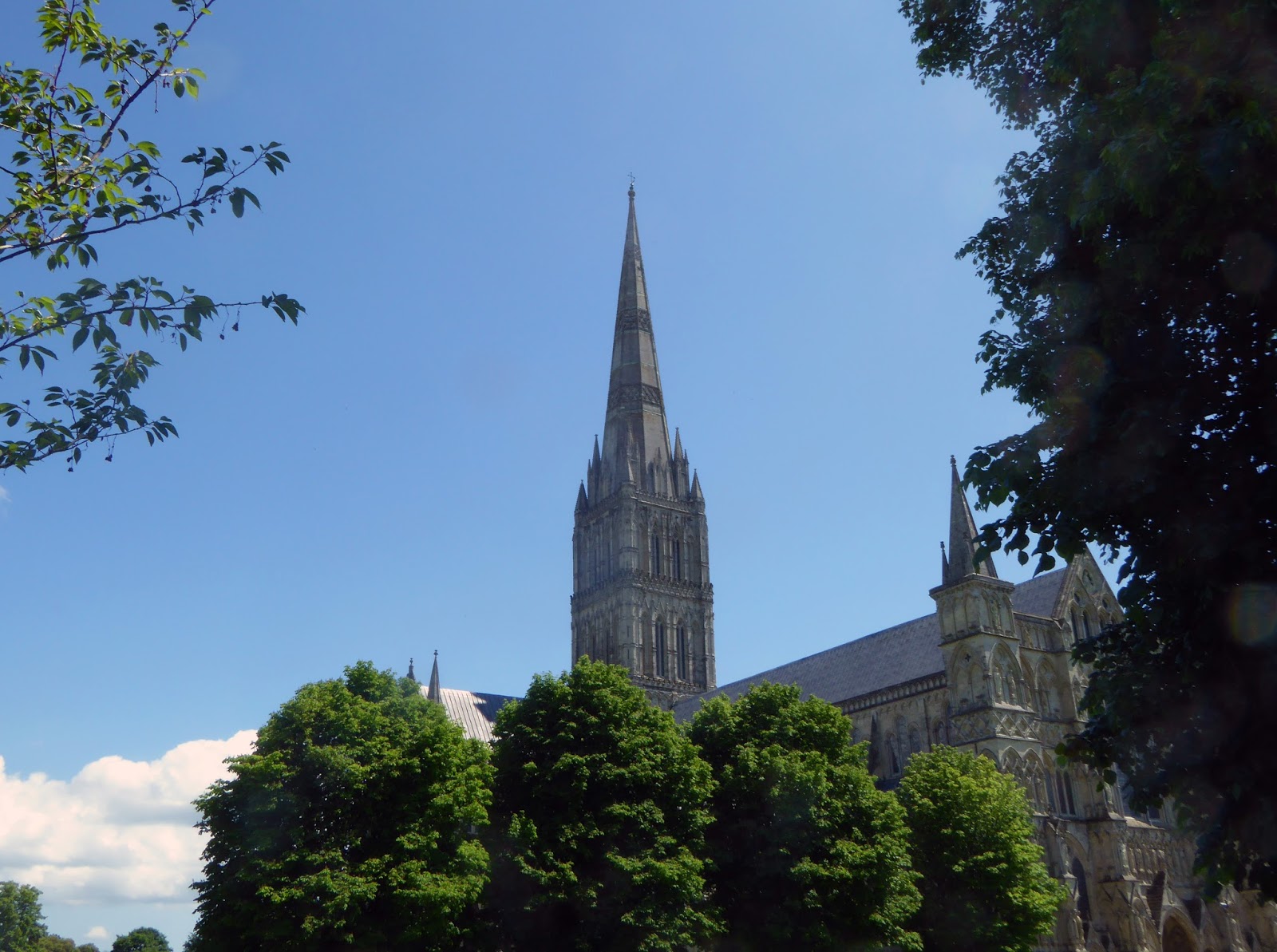
Peregrine Falcon on the Salisbury Cathedral Spire


We have been enjoying the nesting Peregrines at Salisbury Cathedral on BBC Springwatch this week, and yesterday we were in Salisbury for my father's book launch - and were able to catch a glimpse of one of the Peregrines for ourselves.


We had not taken binoculars with us but, as you can see, we were able to see the Peregrine with the naked eye. It was a thrill to see the adult bird circling round the spire and heading off and coming back. I do hope this last remaining chick survives... 

Thursday, 25 May 2017

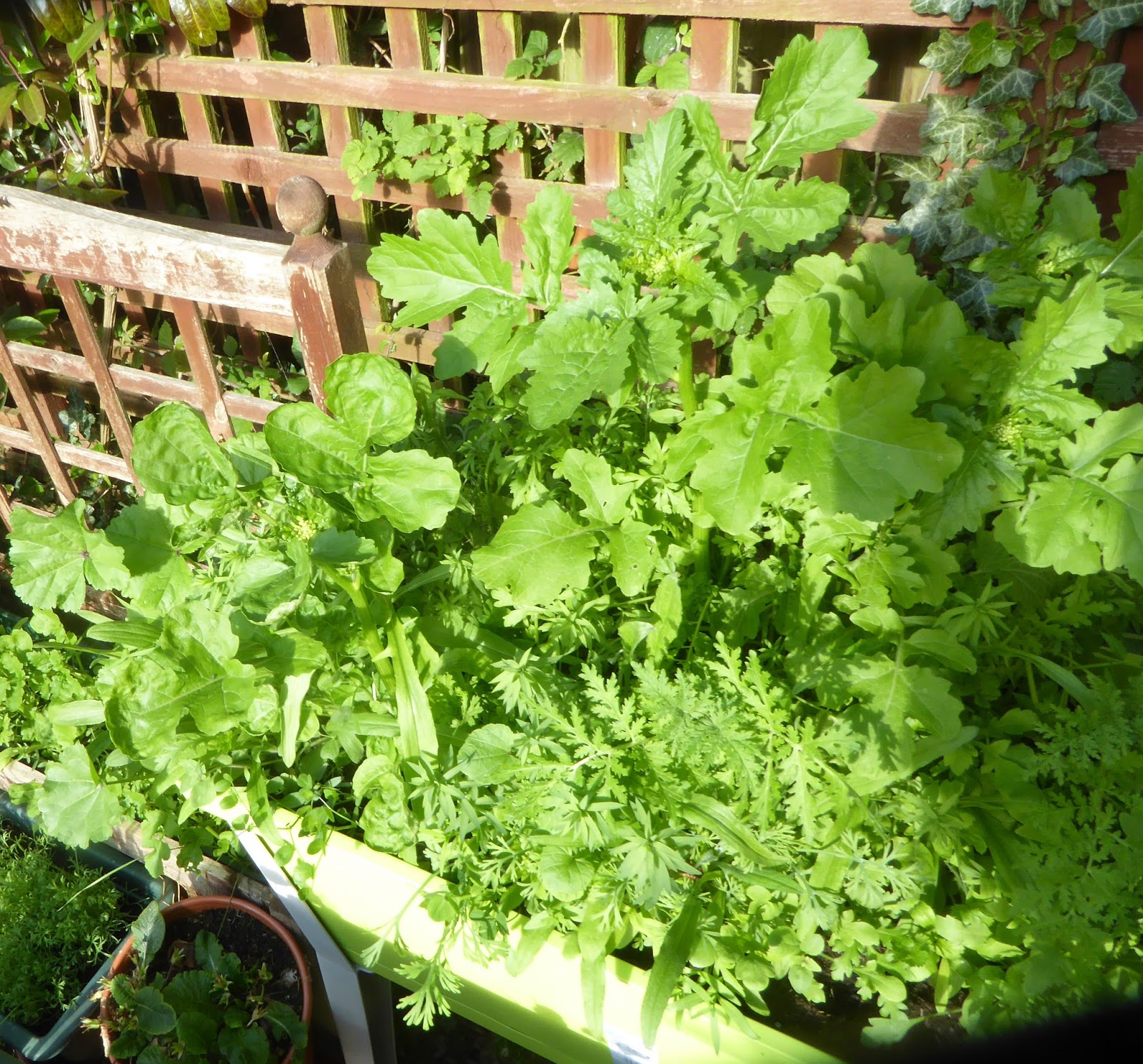
My BBC Springwatch SOS Wildflower Trough (3)


You can see from the photo above, taken this afternoon, just how my wild flower seedlings have grown. There are some buds, and I am keeping a watchful eye on these as it will be good to see the first flower. The trough is my response to the BBC Springwatch S.O.S. project to try to encourage pollinators into the garden. 


The insects, it appears, are not so impatient. I always enjoy seeing Marmalade Hoverflies in the garden. This is the first one I have seen in my trough. These insects are not only good pollinators but their larvae are also useful aphid-eaters.


The photo above shows a Ladybird, unfortunately a succinea Harlequin (Harmonia axyridis), on one of the shoots that is likely to produce the first flowers. It will eat the aphids, but it is not the most welcome of guests.


As I looked around the trough, I noticed a tight ball on the nasturtiums...


... and recognised these Garden Spider spiderlings as we have had clutches of them in the garden on previous years. They are orb-weavers, and the second part of their name, 'diadematus', reflects their jewel like appearance. I hope they won't eat too many of our butterflies, but I find it hard to be so concerned about the wasps and flies that will also make up their diet as they grow.


They dispersed later in the day, making their way over the trough and out into the big wide world.


My trough at the outset prior to wildflower seed-sowing

Thursday, 18 May 2017

Home Patch, with (SOS Springwatch) Wildflower Trough


It is lovely to see more insects appearing, and this is one of the creatures I saw this morning during a sunny spell before the cloud built up. Judging by the length of the antennae, it must, I think, be a juvenile Cricket (my thanks to Conehead54 for the helpful information that this is a Dark Bush-cricket nymph - just in case you missed this in the Comments below).


This ?ornamental Hawthorn is looking particularly colourful at the moment. It overhangs our garden, adding a splash of crimson and white.


Our Nasturtiums have sprouted and will hopefully produce some more bright colours. I always find myself a bit torn because I love the caterpillars that they attract, but there is a certain sense of sadness if the plants are eaten before they have reached their full potential!


The two photographs immediately above show how my wildflower trough is coming on. It would probably be best to thin the plants a bit, but I may leave them this year and see what happens. I am looking forward to the first flowers in the hope that pollinating insects will be attracted into our garden.

I see from my post here that on 10 April, just over a month ago, tiny green shoots were starting to appear. I wonder what the trough will look like in a month's time. I hope there will be some flowers long before then.

Monday, 10 April 2017

A Trough for Wildflowers ~ Responding to a BBC Springwatch SOS


Those of you who read my previous post will know that we visited NT Ickworth some days ago to see the wonderful lambs. The photo above shows the striking rotunda, and if you click the next link, you will see a photo of another rotunda, this time on Belle Isle in the Lake District, which is associated with Fletcher Christian of Mutiny on the Bounty fame (or infamy). But I digress. 


This post is neither about lambs nor acts of derring-do on the high seas. The photo above shows the walled garden at Ickworth last August, when the wildflowers were abundant. Now you may feel that to grow wildflowers from packaged seed is a bit of a contradiction in terms; but, quite apart from the riot of colour, just think of all the pollen that will be attracting our insects. And we do have a nettle patch at home as well.

[UPDATE on 11 April 2017: at this point it seems a good idea to insert the helpful comment from fellow poet and blogger, Mavis Gulliver, as some of us may wish to follow her advice...  Mavis writes... 'We've been gardening for wild flowers on Islay for 21 years but rather than introduce non-native species and importing seed from the continent we gather local seed and have progressed from 1.2 acres of bracken,rocks and heather clumps to 204 species. Of course some have come of their own accord once our mowing regime encouraged them. Soon we will be leaving for a new challenge where I plan to follow the same principles. Gardening in this way doesn't produce such a colourful show as the packs of wild seed but we are helping to maintain the local flora.' Thank you, Mavis, so much for this important tip.]


I posted the tulip photo below in my previous post, but I am posting it again because it is current, and helps to show the extent of the area covered by poppies, cornflowers and all the other beauties in the photo above. 


The August 2016 photo below, shows blues, yellows, reds, whites and greens of this garden: what a spread for our pollen-gatherers...


... like this one...


Inspired not only by the riot of colour at Ickworth but also by the BBC Springwatch SOS exhortation to have a small wildflower planter within the garden, we bought ourselves a green trough and have planted three packets (quite large ones) of mixed wildflower seed. I have moved the primroses to another place now, and have filled the trough with soil pretty much up to the top. Small green shoots, reminding me of the first flush of mustard and cress from the days when we planted small seeds on blotting paper and squares of flannel, have already started to appear.


Needless to say, I can hardly wait for the first bud to open, and, if all goes according to plan, for the insects to come flying in.

The blackboard below was at Ickworth last summer, and while our own wildflower trough will be minuscule in comparison with the Ickworth garden, it should help to encourage wildlife into our homepatch.


Do drop a comment if you plan to plant a wildflower 'garden', too...
I plan to give intermittent updates on our green trough.

Saturday, 4 June 2016

Framlingham Mere, Suffolk Wildlife Trust

We joined the Suffolk Wildlife Trust some months ago and recieved a glossy book of the reserves in their care. One photograph showed Framlingham Mere, so we set off to explore.

After days of bitterly cold, windy, and at times very wet weather, it was a joy to feel some heat and to see the sun lighting up a meadow full of buttercups and shining its rays through the petals of wild poppies.

The reserve with SWT mere in foreground and English Heritage castle behind

The first songster was a Chaffinch

The trail was well-marked with these signs

It was lovely to see an English meadow with buttercups

castle - and church in the village

Quintessential summer scene ...

... and another


The willows were alive with the sound ... of warbling

I think these may be Leaf Beetles and their eggs ...

Galerucella sagittariae


Perhaps a Snipe Fly, but not sure ... (one for iSpot?)

A rather bedraggled Peacock butterfly

Just one duckling (left?) ...

... but so cute!
The duckling led the way and the female Mallard followed


Lovely to see Damselflies


Blue, beautiful blue ...

Mating time for Damselflies

A blue butterfly perched in the mud ...

I think it was a Holly Blue.

We reached the impressive walls of Framlingham Castle in which, according to the plaque ...


Given these royal connections, it is not surprising perhaps to see that a new book of poetry and prose from Framlingham is being launched for the Queen's 90th Birthday.  

I am attempting to collect data for the Garden Bioblitz (as advertised on BBC Springwatch), which is why my captions in this post are rather brief. There is still just time (as of 22.15 on 4 June 2016, UK) for you to join in the Bioblitz, too!